which lists the correct steps that occur when using a diffraction grating to bend light?\no diffracted…
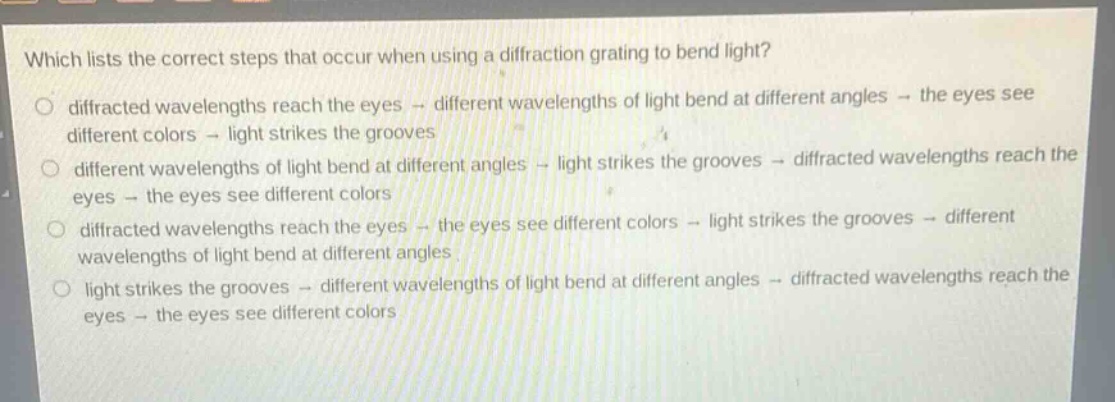
which lists the correct steps that occur when using a diffraction grating to bend light?\no diffracted wavelengths reach the eyes → different wavelengths of light bend at different angles → the eyes see different colors → light strikes the grooves\no different wavelengths of light bend at different angles → light strikes the grooves → diffracted wavelengths reach the eyes → the eyes see different colors\no diffracted wavelengths reach the eyes → the eyes see different colors → light strikes the grooves → different wavelengths of light bend at different angles\no light strikes the grooves → different wavelengths of light bend at different angles → diffracted wavelengths reach the eyes → the eyes see different colors
Answer
Brief Explanations:
When using a diffraction grating, first light strikes the grooves on the grating. Then, due to the grating's structure, different wavelengths of light bend at different angles. These diffracted wavelengths then reach the eyes, and as a result, the eyes see different colors.
Answer:
light strikes the grooves → different wavelengths of light bend at different angles → diffracted wavelengths reach the eyes → the eyes see different colors