measurements of two electric currents are shown in the chart.\nwhich best compares the two…
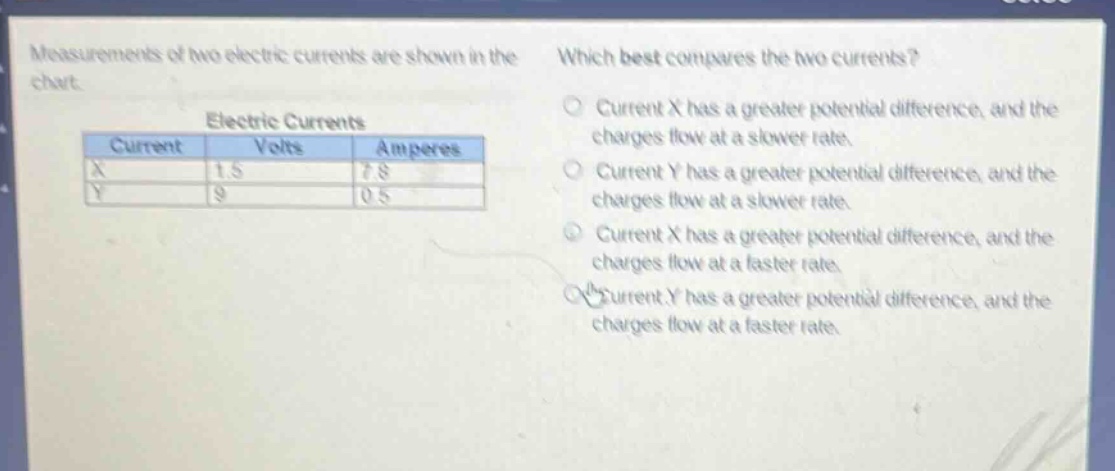
measurements of two electric currents are shown in the chart.\nwhich best compares the two currents?\nelectric currents\n| current | volts | amperes |\n| ---- | ---- | ---- |\n| x | 1.5 | 7.8 |\n| y | 9 | 0.5 |\ncurrent x has a greater potential difference, and the charges flow at a slower rate.\ncurrent y has a greater potential difference, and the charges flow at a slower rate.\ncurrent x has a greater potential difference, and the charges flow at a faster rate.\ncurrent y has a greater potential difference, and the charges flow at a faster rate.
Answer
Explanation:
Step1: Compare potential differences
Potential difference is measured in volts. Current X has 1.5 volts and current Y has 9 volts. Since 9 > 1.5, current Y has a greater potential difference.
Step2: Compare the rate of charge - flow
The rate of charge - flow is measured by current (amperes). Current X has 7.8 amperes and current Y has 0.5 amperes. Since 7.8>0.5, charges flow at a slower rate in current Y.
Answer:
Current Y has a greater potential difference, and the charges flow at a slower rate.