measurements of two electric currents are shown in the chart. which best compares the two currents? electric…
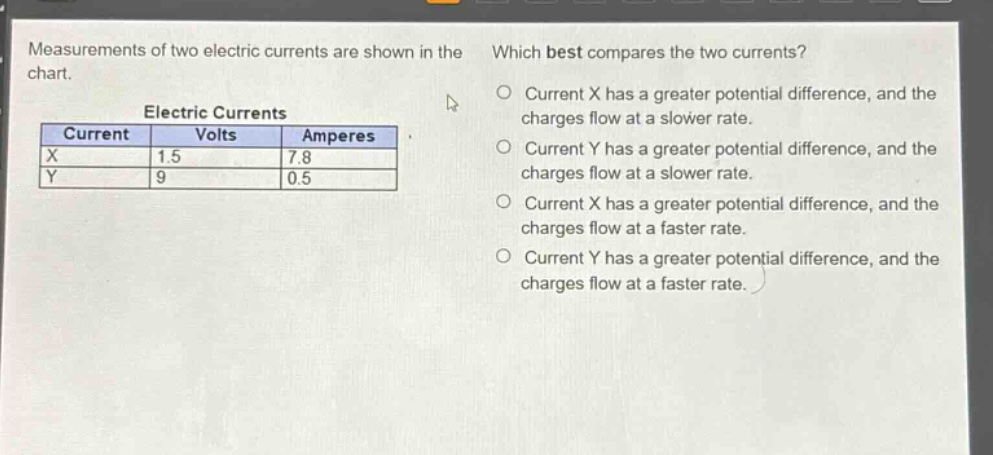
measurements of two electric currents are shown in the chart. which best compares the two currents? electric currents current volts amperes x 1.5 7.8 y 9 0.5 current x has a greater potential difference, and the charges flow at a slower rate. current y has a greater potential difference, and the charges flow at a slower rate. current x has a greater potential difference, and the charges flow at a faster rate. current y has a greater potential difference, and the charges flow at a faster rate.
Answer
Explanation:
Step1: Identify potential - difference
Potential difference is measured in volts. For Current X, volts = 1.5; for Current Y, volts = 9. Since 9>1.5, Current Y has a greater potential difference.
Step2: Identify the rate of charge - flow
The rate of charge - flow is measured by current (amperes). For Current X, amperes = 7.8; for Current Y, amperes = 0.5. Since 7.8 > 0.5, Current X has charges flowing at a faster rate and Current Y has charges flowing at a slower rate.
Answer:
Current Y has a greater potential difference, and the charges flow at a slower rate.