a metal sample is heated and placed into the water in a calorimeter at room temperature. which statement…
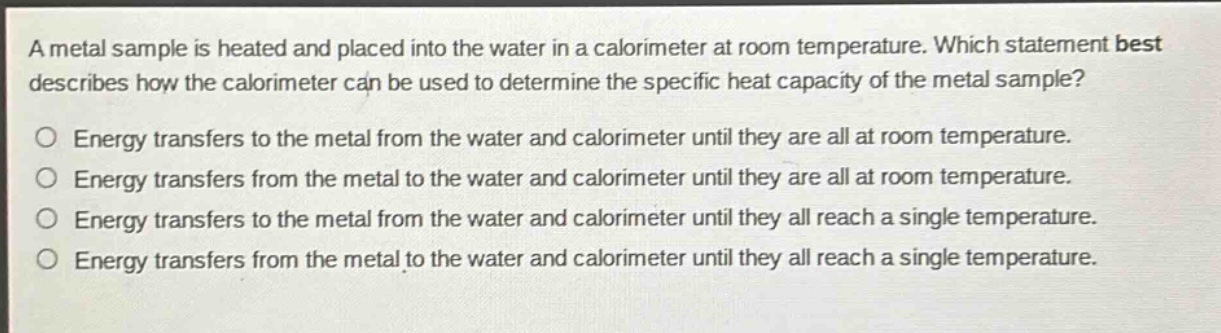
a metal sample is heated and placed into the water in a calorimeter at room temperature. which statement best describes how the calorimeter can be used to determine the specific heat capacity of the metal sample?\nenergy transfers to the metal from the water and calorimeter until they are all at room temperature.\nenergy transfers from the metal to the water and calorimeter until they are all at room temperature.\nenergy transfers to the metal from the water and calorimeter until they all reach a single temperature.\nenergy transfers from the metal to the water and calorimeter until they all reach a single temperature.
Answer
Answer:
Energy transfers from the metal to the water and calorimeter until they all reach a single temperature.
Brief Explanations:
When a heated metal sample is placed in a calorimeter with water at room temperature, heat (energy) flows from the hotter object (metal) to the cooler objects (water and calorimeter). This heat transfer continues until thermal equilibrium is reached, i.e., they all reach a single temperature. The first two options are incorrect as the metal is hotter initially (since it was heated), so energy doesn't transfer to the metal from water/calorimeter to reach room temperature. The third option is wrong because energy transfer is from metal (hotter) to water and calorimeter (cooler), not to the metal. The fourth option correctly describes the heat - transfer process (from hot metal to cooler water and calorimeter) until thermal equilibrium (single temperature) is achieved.