when musicians tune their instruments, they listen for \beats\ in the sound the instruments produce when…
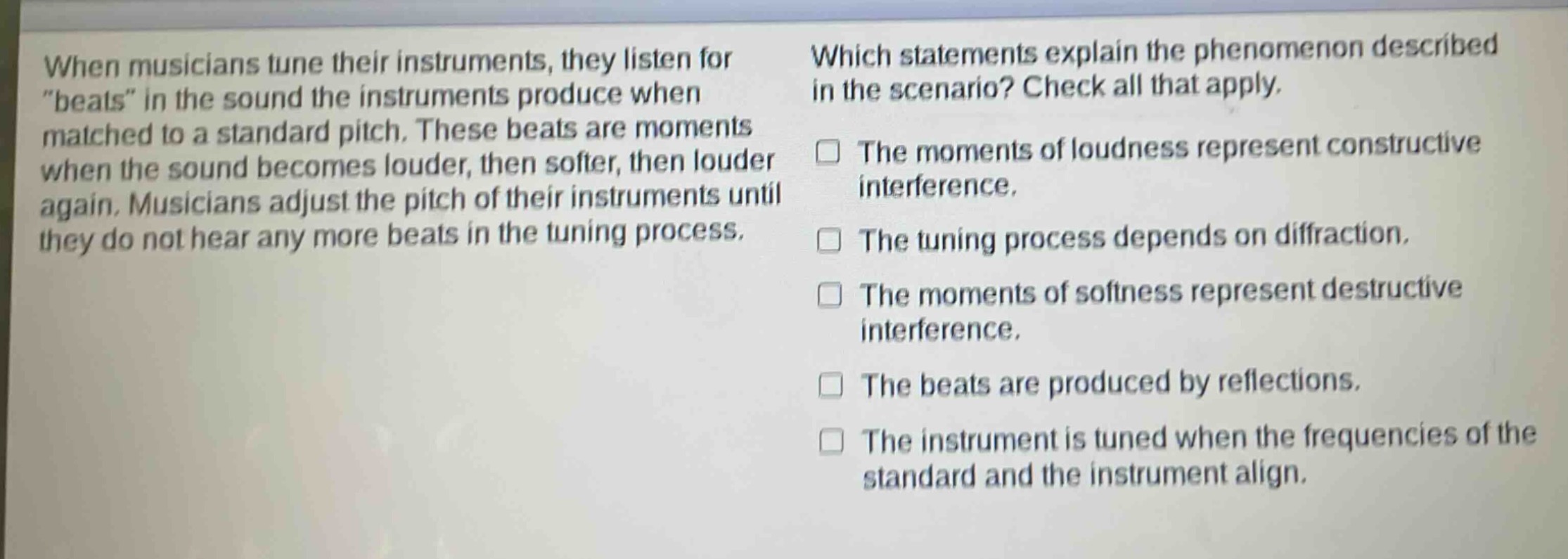
when musicians tune their instruments, they listen for \beats\ in the sound the instruments produce when matched to a standard pitch. these beats are moments when the sound becomes louder, then softer, then louder again. musicians adjust the pitch of their instruments until they do not hear any more beats in the tuning process. which statements explain the phenomenon described in the scenario? check all that apply. the moments of loudness represent constructive interference. the tuning process depends on diffraction. the moments of softness represent destructive interference. the beats are produced by reflections. the instrument is tuned when the frequencies of the standard and the instrument align.
Answer
Brief Explanations:
- Constructive interference leads to louder sound (beats - moments of loudness), so the first statement is correct.
- Diffraction is the bending of waves around obstacles and not related to tuning by beats, so the second statement is incorrect.
- Destructive interference causes softer sound, which corresponds to the moments of softness in the beats, so the third statement is correct.
- Beats are not produced by reflections but by interference of waves with slightly different frequencies, so the fourth statement is incorrect.
- When the frequencies of the standard and the instrument align, there are no more beats and the instrument is tuned, so the fifth statement is correct.
Answer:
The moments of loudness represent constructive interference. The moments of softness represent destructive interference. The instrument is tuned when the frequencies of the standard and the instrument align.