a pebble is dropped in a pond. which best describes the type of wave seen here? transverse, because the…
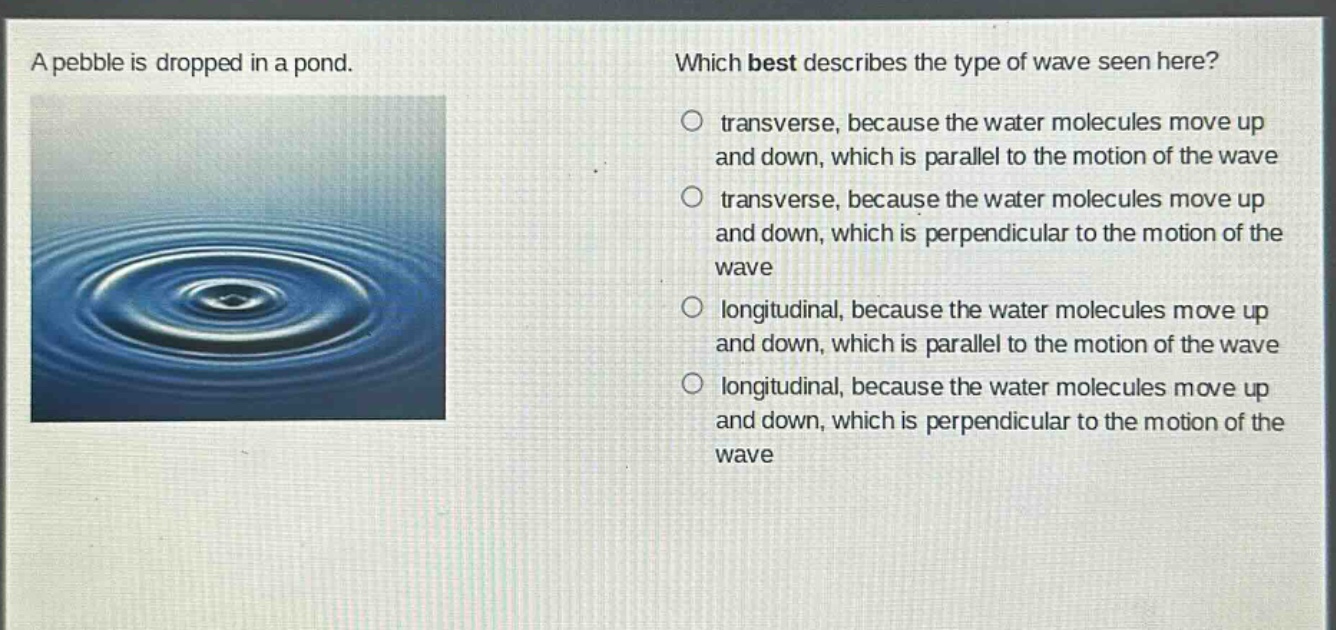
a pebble is dropped in a pond. which best describes the type of wave seen here? transverse, because the water molecules move up and down, which is parallel to the motion of the wave transverse, because the water molecules move up and down, which is perpendicular to the motion of the wave longitudinal, because the water molecules move up and down, which is parallel to the motion of the wave longitudinal, because the water molecules move up and down, which is perpendicular to the motion of the wave
Answer
Brief Explanations:
Transverse waves have particles that move perpendicular to the direction of the wave's motion. When a pebble is dropped in a pond, water - molecules move up and down while the wave moves outward. This up - and - down motion of water molecules is perpendicular to the outward motion of the wave. Longitudinal waves have particles that move parallel to the wave's motion.
Answer:
transverse, because the water molecules move up and down, which is perpendicular to the motion of the wave