read the text.\nair pressure is the pressure in a given area caused by the weight of the atmosphere pressing…
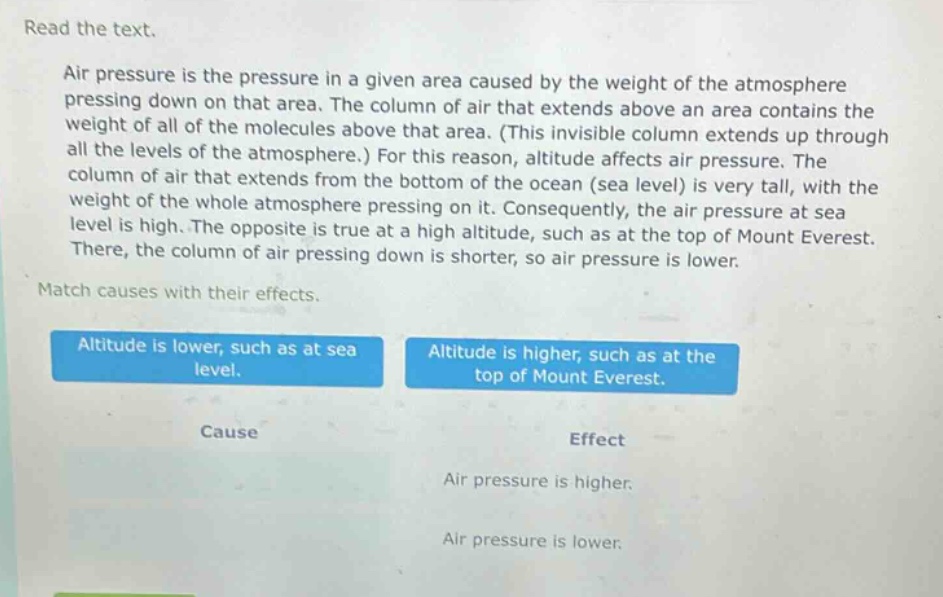
read the text.\nair pressure is the pressure in a given area caused by the weight of the atmosphere pressing down on that area. the column of air that extends above an area contains the weight of all of the molecules above that area. (this invisible column extends up through all the levels of the atmosphere.) for this reason, altitude affects air pressure. the column of air that extends from the bottom of the ocean (sea level) is very tall, with the weight of the whole atmosphere pressing on it. consequently, the air pressure at sea level is high. the opposite is true at a high altitude, such as at the top of mount everest. there, the column of air pressing down is shorter, so air pressure is lower.\nmatch causes with their effects.\naltitude is lower, such as at sea level.\naltitude is higher, such as at the top of mount everest.\ncause\neffect\nair pressure is higher.\nair pressure is lower.
Answer
Brief Explanations:
The text clearly states that at lower altitudes (like sea level), the column of air is taller, resulting in higher air pressure. At higher altitudes (like the top of Mount Everest), the column of air is shorter, leading to lower air pressure.
Answer:
Altitude is lower, such as at sea level. → Air pressure is higher. Altitude is higher, such as at the top of Mount Everest. → Air pressure is lower.