scientists estimate there are between 200 billion and 2 trillion galaxies in the universe. and just as stars…
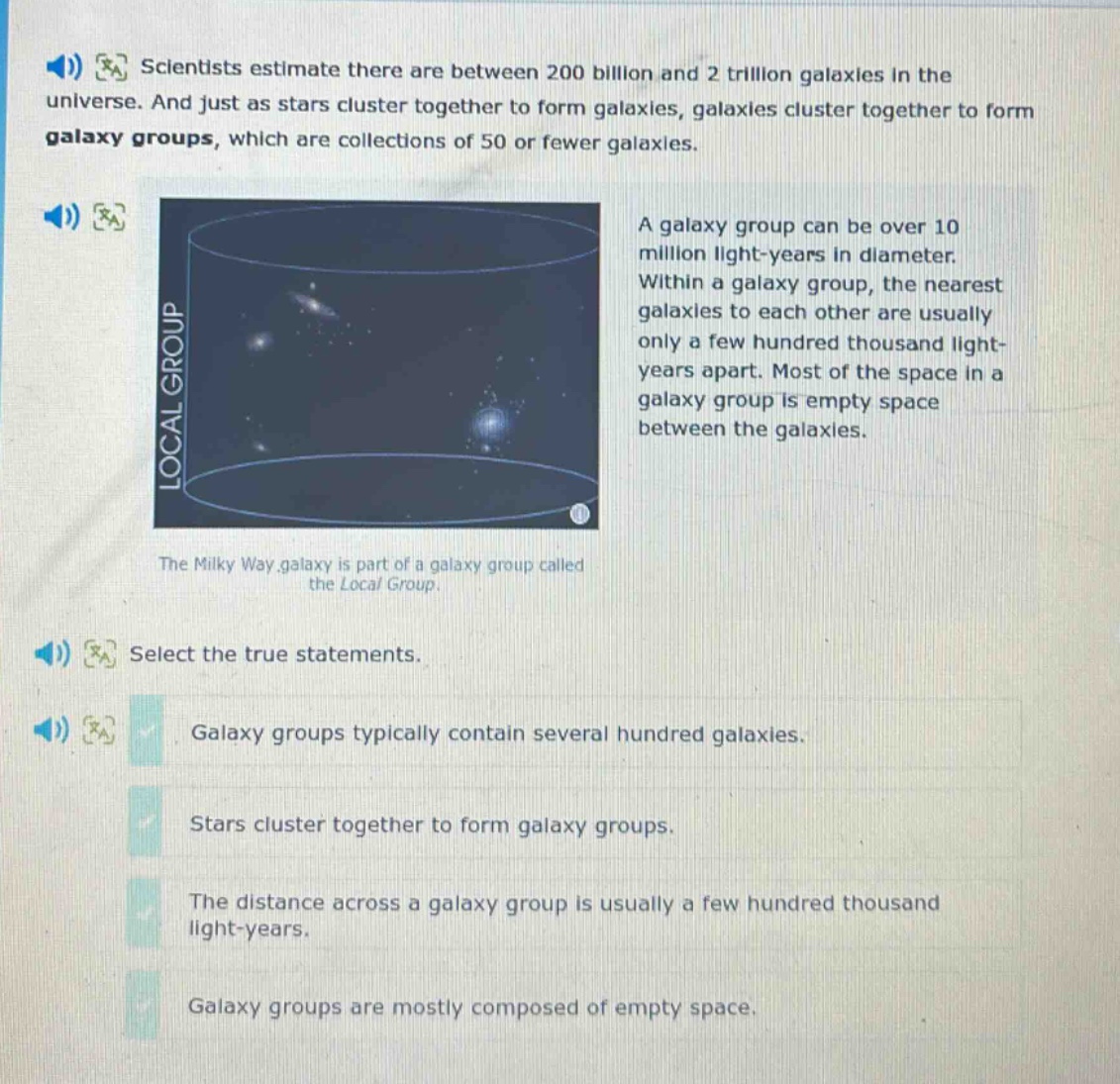
scientists estimate there are between 200 billion and 2 trillion galaxies in the universe. and just as stars cluster together to form galaxies, galaxies cluster together to form galaxy groups, which are collections of 50 or fewer galaxies. a galaxy group can be over 10 million light - years in diameter. within a galaxy group, the nearest galaxies to each other are usually only a few hundred thousand light - years apart. most of the space in a galaxy group is empty space between the galaxies. the milky way galaxy is part of a galaxy group called the local group. select the true statements. galaxy groups typically contain several hundred galaxies. stars cluster together to form galaxy groups. the distance across a galaxy group is usually a few hundred thousand light - years. galaxy groups are mostly composed of empty space.
Answer
Brief Explanations:
- The text states that galaxy groups are collections of 50 or fewer galaxies, so the statement "Galaxy groups typically contain several hundred galaxies" is false.
- Stars cluster to form galaxies, not galaxy - groups, so "Stars cluster together to form galaxy groups" is false.
- A galaxy group can be over 10 million light - years in diameter, not a few hundred thousand light - years, so "The distance across a galaxy group is usually a few hundred thousand light - years" is false.
- The text mentions that most of the space in a galaxy group is empty space between the galaxies, so "Galaxy groups are mostly composed of empty space" is true.
Answer:
Galaxy groups are mostly composed of empty space.