select all the correct answers. a silver coin rubs vigorously against a wool cloth. the cloth becomes…
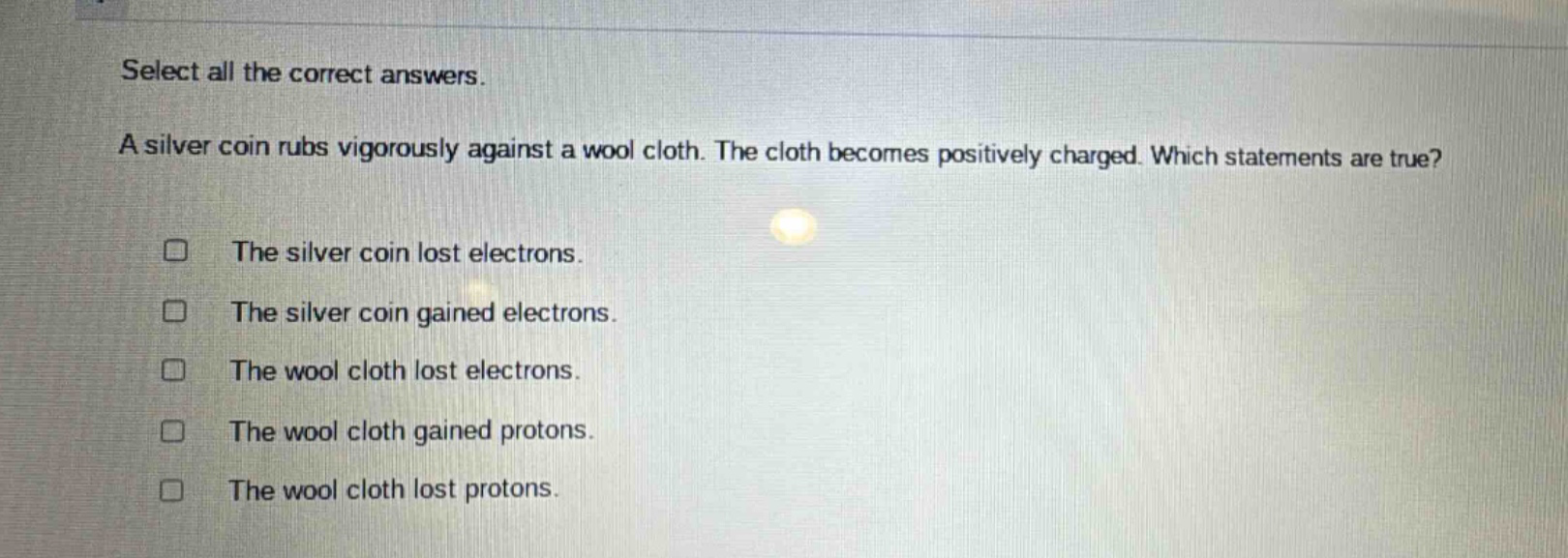
select all the correct answers. a silver coin rubs vigorously against a wool cloth. the cloth becomes positively charged. which statements are true? the silver coin lost electrons. the silver coin gained electrons. the wool cloth lost electrons. the wool cloth gained protons. the wool cloth lost protons.
Answer
Answer:
- The silver coin lost electrons.
- The wool cloth gained electrons (not listed as an option but for understanding, since it became positively - charged by losing electrons to the silver coin). The closest correct option among the given ones is "The silver coin lost electrons."
Explanation:
Step1: Understand charging by friction
Charging by friction occurs when two materials rub against each other. Electrons are transferred between them.
Step2: Analyze charge transfer
When the wool cloth becomes positively - charged, it means it has lost electrons. The electrons must have been transferred to the silver coin. So the silver coin gained electrons and the wool cloth lost electrons. Protons are tightly bound in the nucleus and do not transfer during charging by friction. So the statements about protons being transferred are false.