select the correct text in the passage. which detail best develops the central idea in the text? about the…
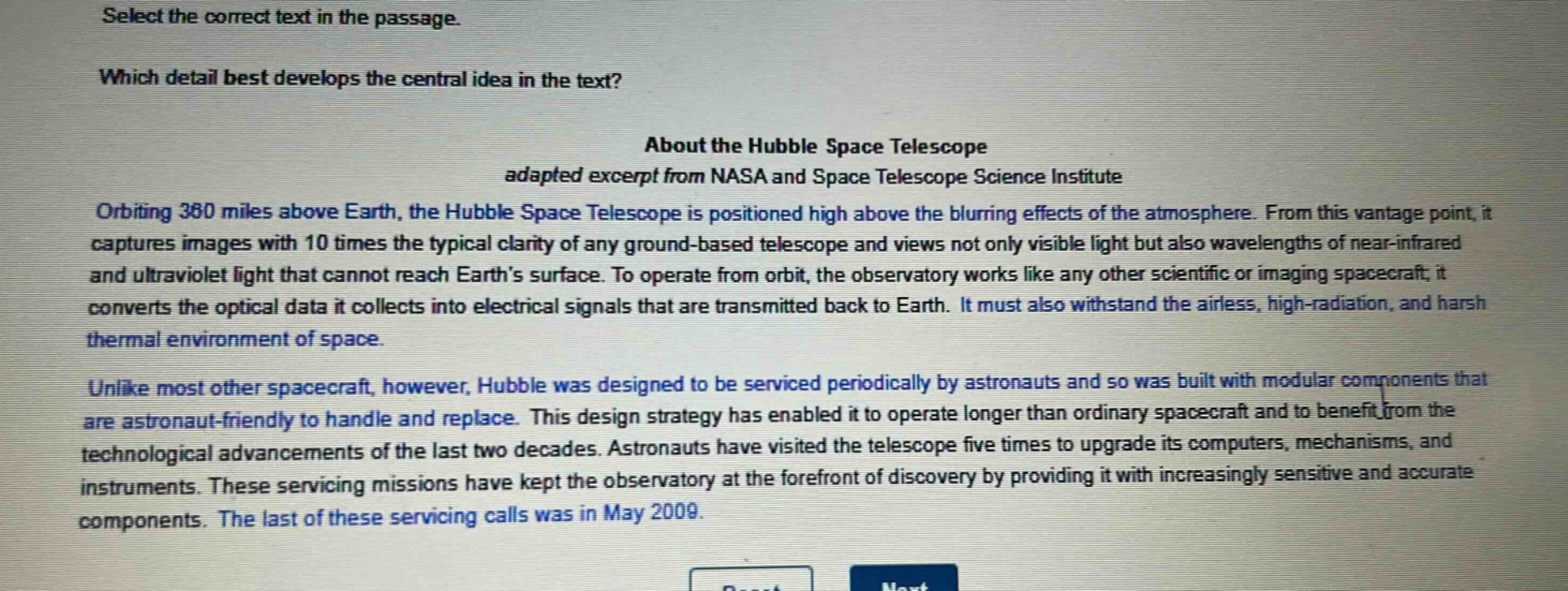
select the correct text in the passage. which detail best develops the central idea in the text? about the hubble space telescope adapted excerpt from nasa and space telescope science institute orbiting 360 miles above earth, the hubble space telescope is positioned high above the blurring effects of the atmosphere. from this vantage point, it captures images with 10 times the typical clarity of any ground - based telescope and views not only visible light but also wavelengths of near - infrared and ultraviolet light that cannot reach earths surface. to operate from orbit, the observatory works like any other scientific or imaging spacecraft; it converts the optical data it collects into electrical signals that are transmitted back to earth. it must also withstand the airless, high - radiation, and harsh thermal environment of space. unlike most other spacecraft, however, hubble was designed to be serviced periodically by astronauts and so was built with modular components that are astronaut - friendly to handle and replace. this design strategy has enabled it to operate longer than ordinary spacecraft and to benefit from the technological advancements of the last two decades. astronauts have visited the telescope five times to upgrade its computers, mechanisms, and instruments. these servicing missions have kept the observatory at the forefront of discovery by providing it with increasingly sensitive and accurate components. the last of these servicing calls was in may 2009.
Answer
Brief Explanations:
The text discusses the Hubble Space Telescope's features and its unique design for periodic servicing by astronauts which has extended its operational life and kept it at the forefront of discovery. The detail about its modular, astronaut - friendly design and the servicing missions best develops the central idea as it emphasizes what sets Hubble apart from other spacecraft and how it has remained effective over time.
Answer:
"Unlike most other spacecraft, however, Hubble was designed to be serviced periodically by astronauts and so was built with modular components that are astronaut - friendly to handle and replace. This design strategy has enabled it to operate longer than ordinary spacecraft and to benefit from the technological advancements of the last two decades. Astronauts have visited the telescope five times to upgrade its computers, mechanisms, and instruments. These servicing missions have kept the observatory at the forefront of discovery by providing it with increasingly sensitive and accurate components. The last of these servicing calls was in May 2009."