a solar eclipse occurs when the moon gets between earth and the sun, and the moon casts its shadow over…
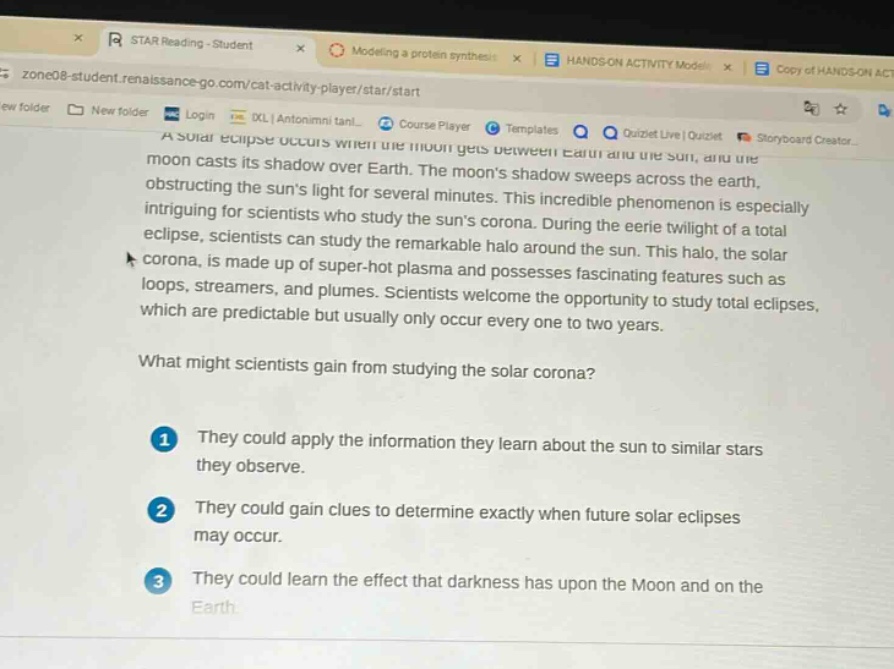
a solar eclipse occurs when the moon gets between earth and the sun, and the moon casts its shadow over earth. the moons shadow sweeps across the earth, obstructing the suns light for several minutes. this incredible phenomenon is especially intriguing for scientists who study the suns corona. during the eerie twilight of a total eclipse, scientists can study the remarkable halo around the sun. this halo, the solar corona, is made up of super - hot plasma and possesses fascinating features such as loops, streamers, and plumes. scientists welcome the opportunity to study total eclipses, which are predictable but usually only occur every one to two years. what might scientists gain from studying the solar corona? 1 they could apply the information they learn about the sun to similar stars they observe. 2 they could gain clues to determine exactly when future solar eclipses may occur. 3 they could learn the effect that darkness has upon the moon and on the earth.
Answer
Brief Explanations:
The solar corona is part of the sun. Studying it can give insights applicable to similar stars. Determining eclipse - occurrence is not related to corona study. And the effect of darkness on moon and Earth is not the focus of corona study.
Answer:
- They could apply the information they learn about the sun to similar stars they observe.