solar panels convert light energy from sunlight into electrical energy. what material is most likely used in…
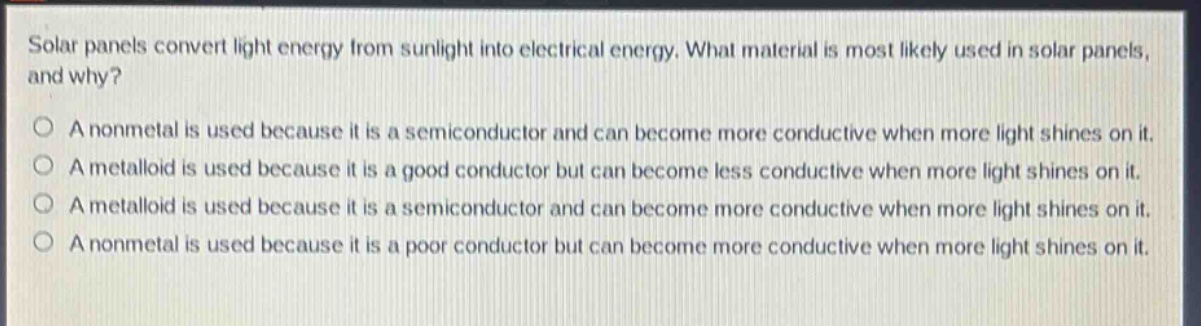
solar panels convert light energy from sunlight into electrical energy. what material is most likely used in solar panels, and why?\no a nonmetal is used because it is a semiconductor and can become more conductive when more light shines on it.\no a metalloid is used because it is a good conductor but can become less conductive when more light shines on it.\no a metalloid is used because it is a semiconductor and can become more conductive when more light shines on it.\no a nonmetal is used because it is a poor conductor but can become more conductive when more light shines on it.
Answer
Answer:
C. A metalloid is used because it is a semiconductor and can become more conductive when more light shines on it.
Brief Explanations:
Metalloids have semiconductor - like properties. In solar panels, they can absorb photons from sunlight, which excites electrons and increases conductivity, enabling conversion of light to electricity. Non - metals are generally poor conductors and not ideal for this purpose. Metalloids are not good conductors in the traditional sense like metals, but their conductivity can be enhanced by light exposure.