space science: this passage examines the challenges of keeping astronauts healthy in space. unlike those who…
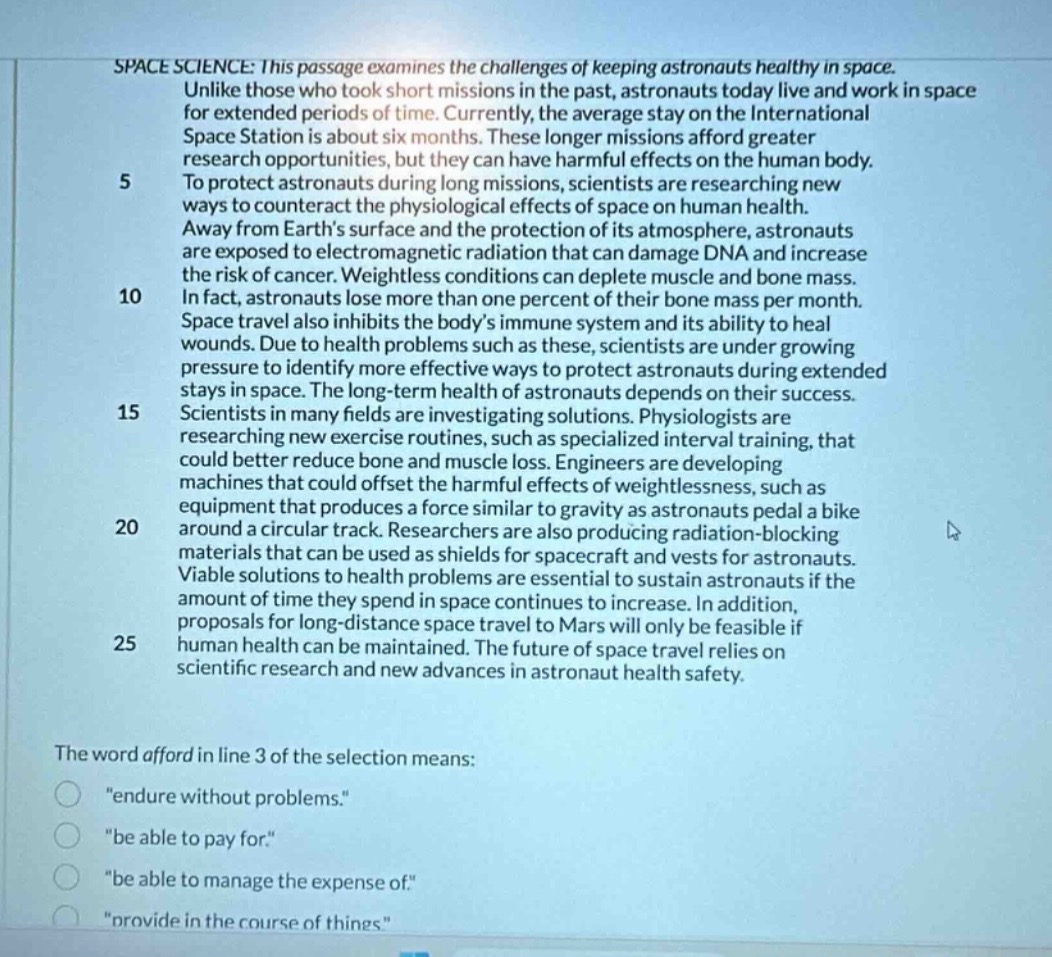
space science: this passage examines the challenges of keeping astronauts healthy in space. unlike those who took short missions in the past, astronauts today live and work in space for extended periods of time. currently, the average stay on the international space station is about six months. these longer missions afford greater research opportunities, but they can have harmful effects on the human body. to protect astronauts during long missions, scientists are researching new ways to counteract the physiological effects of space on human health. away from earth’s surface and the protection of its atmosphere, astronauts are exposed to electromagnetic radiation that can damage dna and increase the risk of cancer. weightless conditions can deplete muscle and bone mass. in fact, astronauts lose more than one percent of their bone mass per month. space travel also inhibits the body’s immune system and its ability to heal wounds. due to health problems such as these, scientists are under growing pressure to identify more effective ways to protect astronauts during extended stays in space. the long - term health of astronauts depends on their success. scientists in many fields are investigating solutions. physiologists are researching new exercise routines, such as specialized interval training, that could better reduce bone and muscle loss. engineers are developing machines that could offset the harmful effects of weightlessness, such as equipment that produces a force similar to gravity as astronauts pedal a bike around a circular track. researchers are also producing radiation - blocking materials that can be used as shields for spacecraft and vests for astronauts. viable solutions to health problems are essential to sustain astronauts if the amount of time they spend in space continues to increase. in addition, proposals for long - distance space travel to mars will only be feasible if human health can be maintained. the future of space travel relies on scientific research and new advances in astronaut health safety.\nthe word afford in line 3 of the selection means:\n“endure without problems.”\n“be able to pay for.”\n“be able to manage the expense of.”\n“provide in the course of things.”
Answer
Brief Explanations:
In the context of the passage, "afford" is used to describe that longer - space missions give or provide greater research opportunities. The other options about paying or managing expenses and enduring without problems do not fit the context.
Answer:
"provide in the course of things"