static electricity is created when an object has more of one type of charge than the other. both positively…
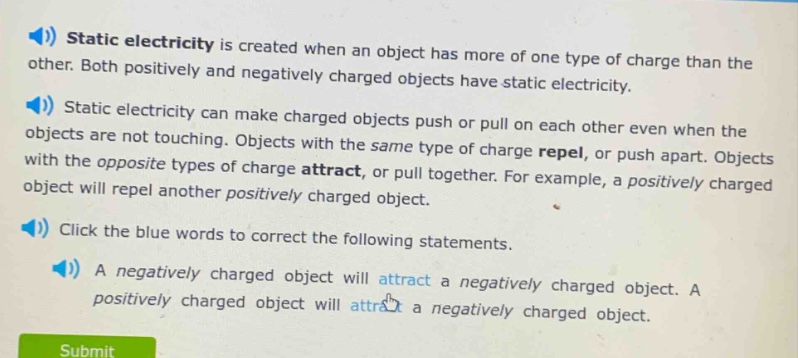
static electricity is created when an object has more of one type of charge than the other. both positively and negatively charged objects have static electricity. static electricity can make charged objects push or pull on each other even when the objects are not touching. objects with the same type of charge repel, or push apart. objects with the opposite types of charge attract, or pull together. for example, a positively charged object will repel another positively charged object. click the blue words to correct the following statements. a negatively charged object will attract a negatively charged object. a positively charged object will attract a negatively charged object.
Answer
Brief Explanations:
According to the principle of electrostatics, like - charged objects repel and opposite - charged objects attract. So a negatively charged object will repel another negatively charged object, and a positively charged object will attract a negatively charged object. The first "attract" in the statement should be "repel".
Answer:
A negatively charged object will repel a negatively charged object. A positively charged object will attract a negatively charged object.