a student proposes this hypothesis in class: \if i make the angle of a ramp steeper, then a ball rolling…
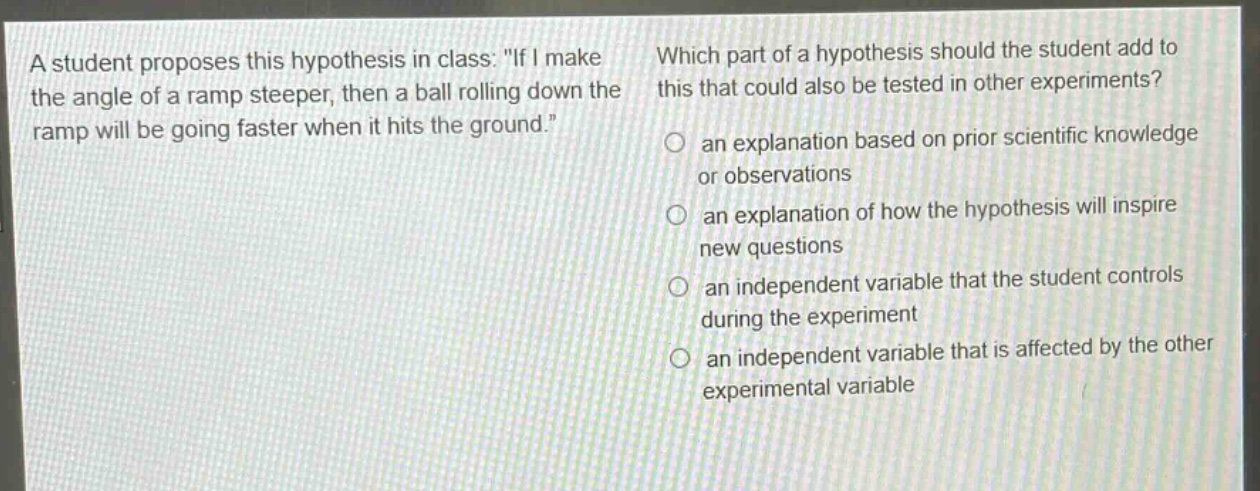
a student proposes this hypothesis in class: \if i make the angle of a ramp steeper, then a ball rolling down the ramp will be going faster when it hits the ground.\ which part of a hypothesis should the student add to this that could also be tested in other experiments? an explanation based on prior scientific knowledge or observations an explanation of how the hypothesis will inspire new questions an independent variable that the student controls during the experiment an independent variable that is affected by the other experimental variable
Answer
Brief Explanations:
Un hipótesis debe incluir una explicación basada en conocimientos científicos previos o observaciones para ser más robusta y testable en múltiples experimentos. Las otras opciones no son esenciales para que un hipótesis sea testable en diferentes experimentos. La variable independiente ya está presente en el hipótesis dado (ángulo de la rampa), y explicar cómo inspirará nuevas preguntas no es lo más fundamental para que sea testable. Además, la variable independiente no es afectada por otras variables experimentales, sino que es manipulada por el investigador.
Answer:
an explanation based on prior scientific knowledge or observations