if two gases are present in a container, the total pressure in the container is equal to\nthe sum of the…
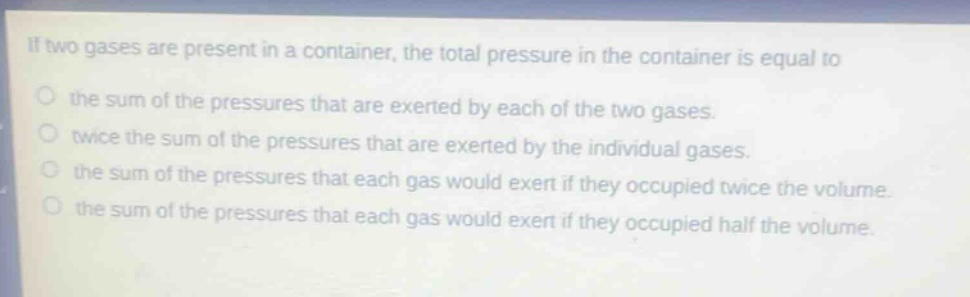
if two gases are present in a container, the total pressure in the container is equal to\nthe sum of the pressures that are exerted by each of the two gases.\ntwice the sum of the pressures that are exerted by the individual gases.\nthe sum of the pressures that each gas would exert if they occupied twice the volume.\nthe sum of the pressures that each gas would exert if they occupied half the volume.
Answer
Brief Explanations:
According to Dalton's law of partial pressures, the total pressure of a mixture of non - reacting gases is the sum of the partial pressures of each gas. Partial pressure is the pressure that each gas would exert if it alone occupied the volume of the container. So the total pressure in a container with two gases is the sum of the pressures that are exerted by each of the two gases.
Answer:
the sum of the pressures that are exerted by each of the two gases.