two metal blocks that have slightly different temperatures are placed next to one another. after five…
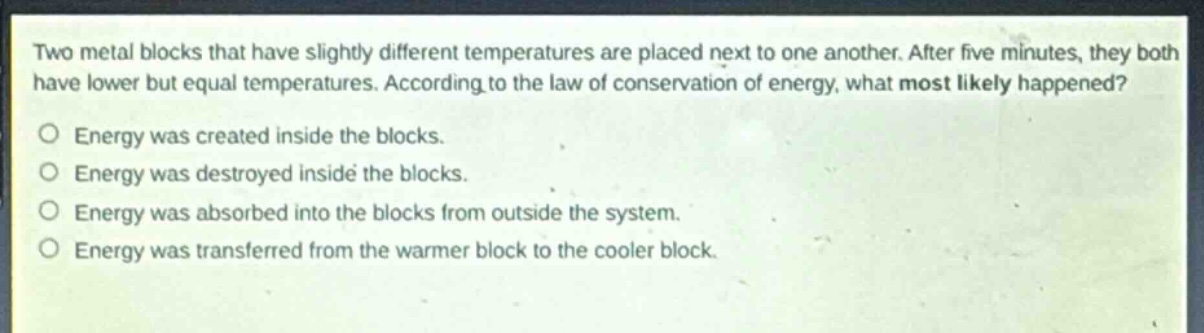
two metal blocks that have slightly different temperatures are placed next to one another. after five minutes, they both have lower but equal temperatures. according to the law of conservation of energy, what most likely happened?\no energy was created inside the blocks.\no energy was destroyed inside the blocks.\no energy was absorbed into the blocks from outside the system.\no energy was transferred from the warmer block to the cooler block.
Answer
Brief Explanations:
The law of conservation of energy states that energy cannot be created or destroyed. When two metal - blocks with different temperatures are placed next to each other, heat (a form of energy) is transferred from the warmer block to the cooler block until they reach thermal equilibrium. Since their final temperatures are lower, some heat was also likely lost to the surrounding environment. But the main process between the two blocks is energy transfer from the warmer to the cooler one.
Answer:
Energy was transferred from the warmer block to the cooler block.