use the drop - down menus to complete the statements about the death of stars. when a supergiant explodes, a…
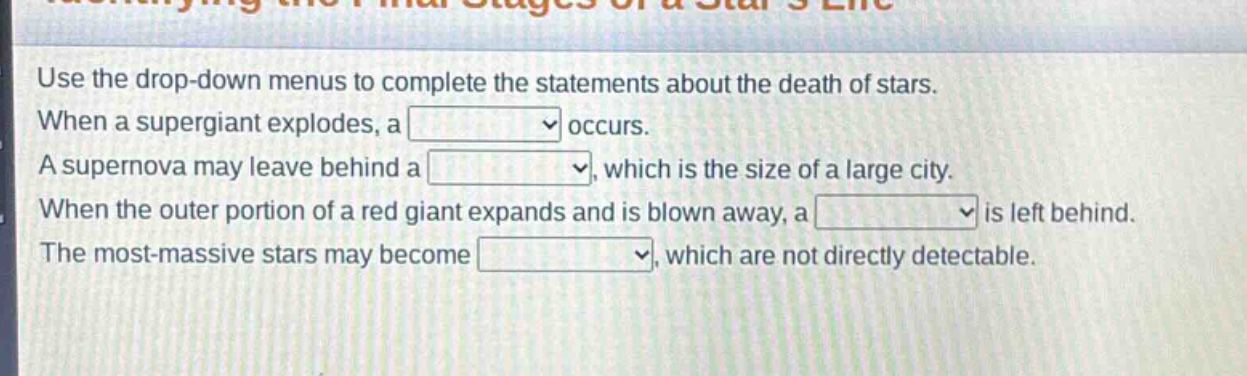
use the drop - down menus to complete the statements about the death of stars. when a supergiant explodes, a occurs. a supernova may leave behind a , which is the size of a large city. when the outer portion of a red giant expands and is blown away, a is left behind. the most - massive stars may become , which are not directly detectable.
Answer
Brief Explanations:
- When a supergiant explodes, it is a supernova event.
- A supernova can leave behind a neutron - star which is very dense and about the size of a large city.
- When the outer part of a red giant is blown away, a white - dwarf is left behind.
- The most massive stars can collapse to form black - holes which are not directly detectable as they do not emit light.
Answer:
- supernova
- neutron star
- white dwarf
- black hole