13. what were the two countries to break off of india and establish their own countries? (1971)\nhuman…
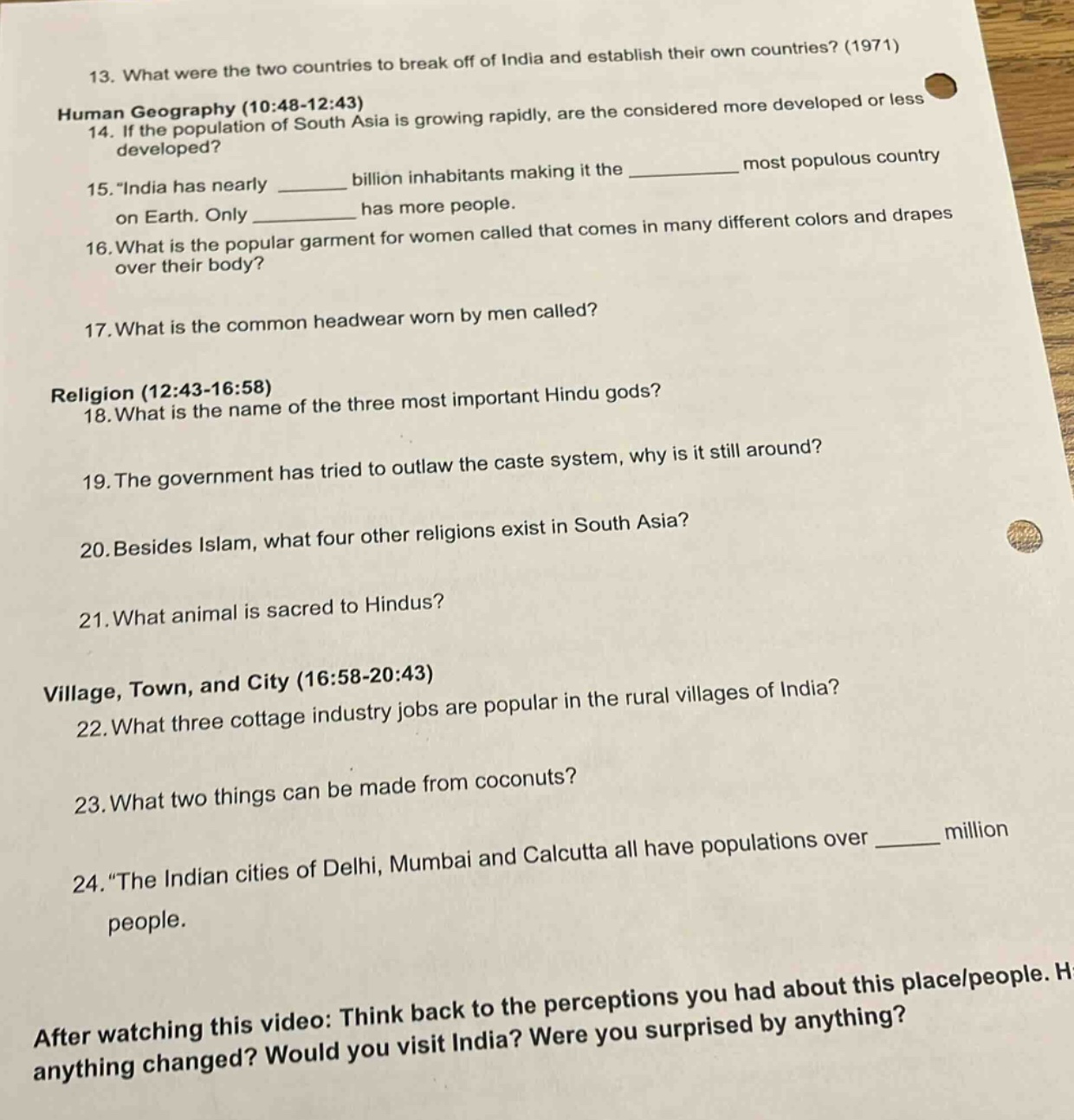
13. what were the two countries to break off of india and establish their own countries? (1971)\nhuman geography (10:48 - 12:43)\n14. if the population of south asia is growing rapidly, are the considered more developed or less developed?\n15. *india has nearly ______ billion inhabitants making it the ____________ most populous country on earth. only ____________ has more people.\n16. what is the popular garment for women called that comes in many different colors and drapes over their body?\n17. what is the common headwear worn by men called?\nreligion (12:43 - 16:58)\n18. what is the name of the three most important hindu gods?\n19. the government has tried to outlaw the caste system, why is it still around?\n20. besides islam, what four other religions exist in south asia?\n21. what animal is sacred to hindus?\nvillage, town, and city (16:58 - 20:43)\n22. what three cottage industry jobs are popular in the rural villages of india?\n23. what two things can be made from coconuts?\n24. *the indian cities of delhi, mumbai and calcutta all have populations over ______ million people.\nafter watching this video: think back to the perceptions you had about this place/people. has anything changed? would you visit india? were you surprised by anything?
Answer
Brief Explanations:
- En 1971, Bangladesh se separó de Pakistán (antes de la separación, Pakistán y la India fueron una sola entidad colonial, y luego Pakistán se dividió). No hay dos países que se separaron directamente de la India en 1971.
- Aunque la población de Sudásea está creciendo rápidamente, en general se considera menos desarrollado debido a factores como la tasa de alfabetización, infraestructura y nivel de ingresos.
- India tiene cerca de 1,4 billones de habitantes, siendo el segundo país más poblado del mundo después de China.
- El sari es un vestido popular para mujeres en la India que viene en muchos colores y formas de draparse.
- El turbante es un tocado común para hombres en la India, especialmente en algunas regiones.
- Los tres dioses más importantes del hinduismo son Brahmá (el creador), Visnú (el protector) y Shivá (el destructor - renovador).
- Aunque el gobierno ha intentado abolir el sistema de castas, persiste debido a la tradición, creencias profundamente arraigadas y desigualdades socio - económicas.
- Además del islam, en Sudásea existen el hinduismo, el budismo, el jainismo y el sikhismo.
- El buey es un animal sagrado para los hindúes.
- En las aldeas rurales de la India, trabajos populares en la industria casera son la artesanía textil, la cerámica y la elaboración de artesanías de madera.
- De los cocos se pueden hacer aceite de coco y copra (seca de la carne del coco).
- Las ciudades de Delhi, Mumbai y Kolkata en la India tienen poblaciones superiores a 10 millones de personas.
Answer:
- Bangladesh se separó de Pakistán (no dos países se separaron directamente de la India en 1971).
- Menos desarrollados.
- 1,4; segundo; China.
- Sari.
- Turbante.
- Brahmá, Visnú, Shivá.
- Por tradición, creencias profundamente arraigadas y desigualdades socio - económicas.
- Hinduismo, budismo, jainismo, sikhismo.
- Buey.
- Artesanía textil, cerámica, artesanías de madera.
- Aceite de coco, copra.
-