19 multiple choice 2 points many people have heard the tales of ulysses, his courageous exploits during the…
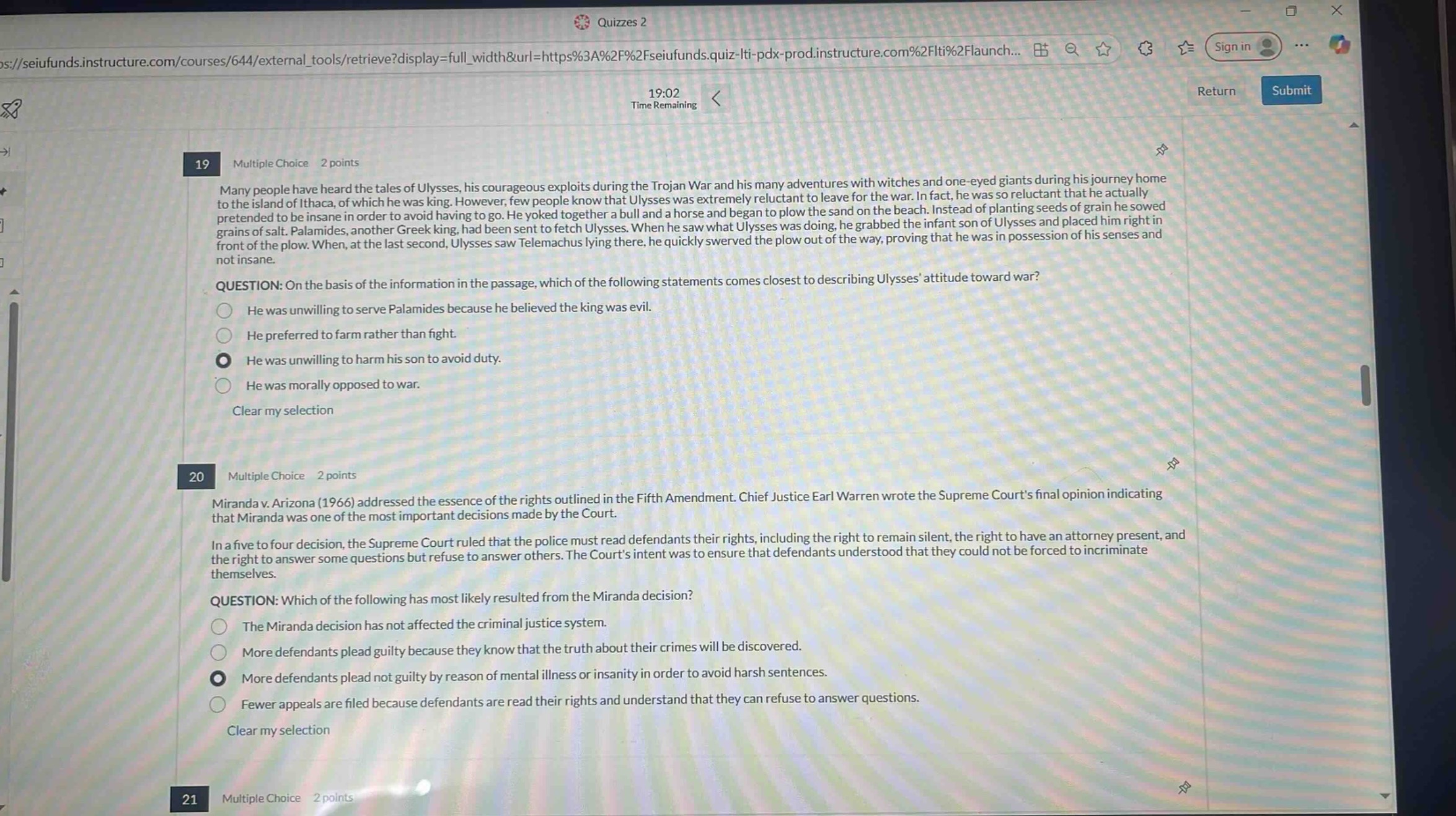
19 multiple choice 2 points many people have heard the tales of ulysses, his courageous exploits during the trojan war and his many adventures with witches and one - eyed giants during his journey home to the island of ithaca, of which he was king. however, few people know that ulysses was extremely reluctant to leave for the war. in fact, he was so reluctant that he actually pretended to be insane in order to avoid having to go. he yoked together a bull and a horse and began to plow the sand on the beach. instead of planting seeds of grain he sowed grains of salt. palamides, another greek king, had been sent to fetch ulysses. when he saw what ulysses was doing, he grabbed the infant son of ulysses and placed him right in front of the plow. when, at the last second, ulysses saw telemachus lying there, he quickly swerved the plow out of the way, proving that he was in possession of his senses and not insane. question: on the basis of the information in the passage, which of the following statements comes closest to describing ulysses attitude toward war? he was unwilling to serve palamides because he believed the king was evil. he preferred to farm rather than fight. he was unwilling to harm his son to avoid duty. he was morally opposed to war. clear my selection 20 multiple choice 2 points miranda v. arizona (1966) addressed the essence of the rights outlined in the fifth amendment. chief justice earl warren wrote the supreme courts final opinion indicating that miranda was one of the most important decisions made by the court. in a five - to - four decision, the supreme court ruled that the police must read defendants their rights, including the right to remain silent, the right to have an attorney present, and the right to answer some questions but refuse to answer others. the courts intent was to ensure that defendants understood that they could not be forced to incriminate themselves. question: which of the following has most likely resulted from the miranda decision? the miranda decision has not affected the criminal justice system. more defendants plead guilty because they know that the truth about their crimes will be discovered. more defendants plead not guilty by reason of mental illness or insanity in order to avoid harsh sentences. fewer appeals are filed because defendants are read their rights and understand that they can refuse to answer questions. clear my selection 21 multiple choice 2 points
Answer
Brief Explanations:
Question 19:
The passage shows that Ulysses pretended to be insane to avoid war but when his son was in danger, he swerved the plow, indicating he was unwilling to harm his son to avoid his duty of going to war.
Question 20:
The Miranda decision requires police to read defendants their rights to prevent forced self - incrimination. It is not likely to have led to the options A, B, or D. There is no clear connection between Miranda rights and more pleas of not guilty by reason of mental illness, but among the options, it is the most likely incorrect outcome presented.
Answer:
- He was unwilling to harm his son to avoid duty.
- More defendants plead not guilty by reason of mental illness or insanity in order to avoid harsh sentences.