20 multiple choice 2 points miranda v. arizona (1966) addressed the essence of the rights outlined in the…
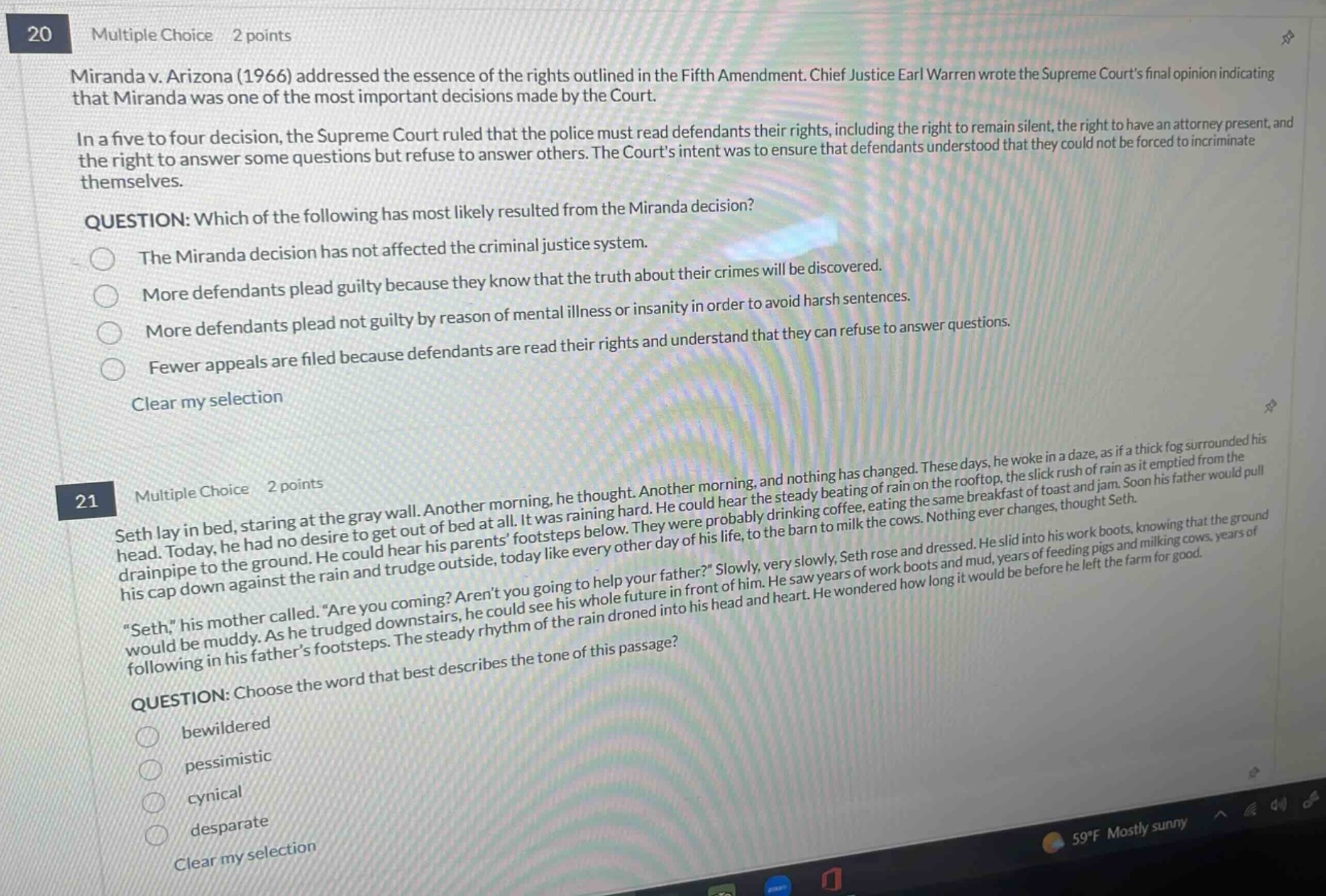
20 multiple choice 2 points miranda v. arizona (1966) addressed the essence of the rights outlined in the fifth amendment. chief justice earl warren wrote the supreme courts final opinion indicating that miranda was one of the most important decisions made by the court. in a five - to - four decision, the supreme court ruled that the police must read defendants their rights, including the right to remain silent, the right to have an attorney present, and the right to answer some questions but refuse to answer others. the courts intent was to ensure that defendants understood that they could not be forced to incriminate themselves. question: which of the following has most likely resulted from the miranda decision? the miranda decision has not affected the criminal justice system. more defendants plead guilty because they know that the truth about their crimes will be discovered. more defendants plead not guilty by reason of mental illness or insanity in order to avoid harsh sentences. more defendants plead not guilty because they are read their rights and understand that they can refuse to answer questions. fewer appeals are filed because defendants are read their rights and understand that they can refuse to answer questions. clear my selection 21 multiple choice 2 points seth lay in bed, staring at the gray wall. another morning, and nothing has changed. these days, he woke in a daze, as if a thick fog surrounded his head. today, he had no desire to get out of bed at all. it was raining hard. he could hear the steady beating of rain on the rooftop, the slick rush of rain as it emptied from the drainpipe to the ground. he could hear his parents footsteps below. they were probably drinking coffee, eating the same breakfast of toast and jam. soon his father would pull his cap down against the rain and trudge outside, today like every other day of his life, to the barn to milk the cows. nothing ever changes, thought seth. \seth,\ his mother called. \are you coming? arent you going to help your father?\ slowly, very slowly, seth rose and dressed. he slid into his work boots, knowing that the ground would be muddy. as he trudged downstairs, he could see his whole future in front of him. he saw years of work boots and mud, years of feeding pigs and milking cows, years of following in his fathers footsteps. the steady rhythm of the rain droned into his head and heart. he wondered how long it would be before he left the farm for good. question: choose the word that best describes the tone of this passage? bewildered pessimistic cynical desparate clear my selection
Answer
Brief Explanations:
For question 20, the Miranda decision requires police to inform defendants of their rights, including the right to remain silent. This likely leads to more defendants pleading not guilty as they know they can refuse to answer questions. For question 21, the passage describes Seth's unchanging, dull - and somewhat hopeless - daily life, which reflects a pessimistic tone.
Answer:
- More defendants plead not guilty by reason of mental illness or insanity in order to avoid harsh sentences.
- pessimistic