58. the u.s. foreign - policy approach during the cold war was based on\na) isolationism\nb) containment of…
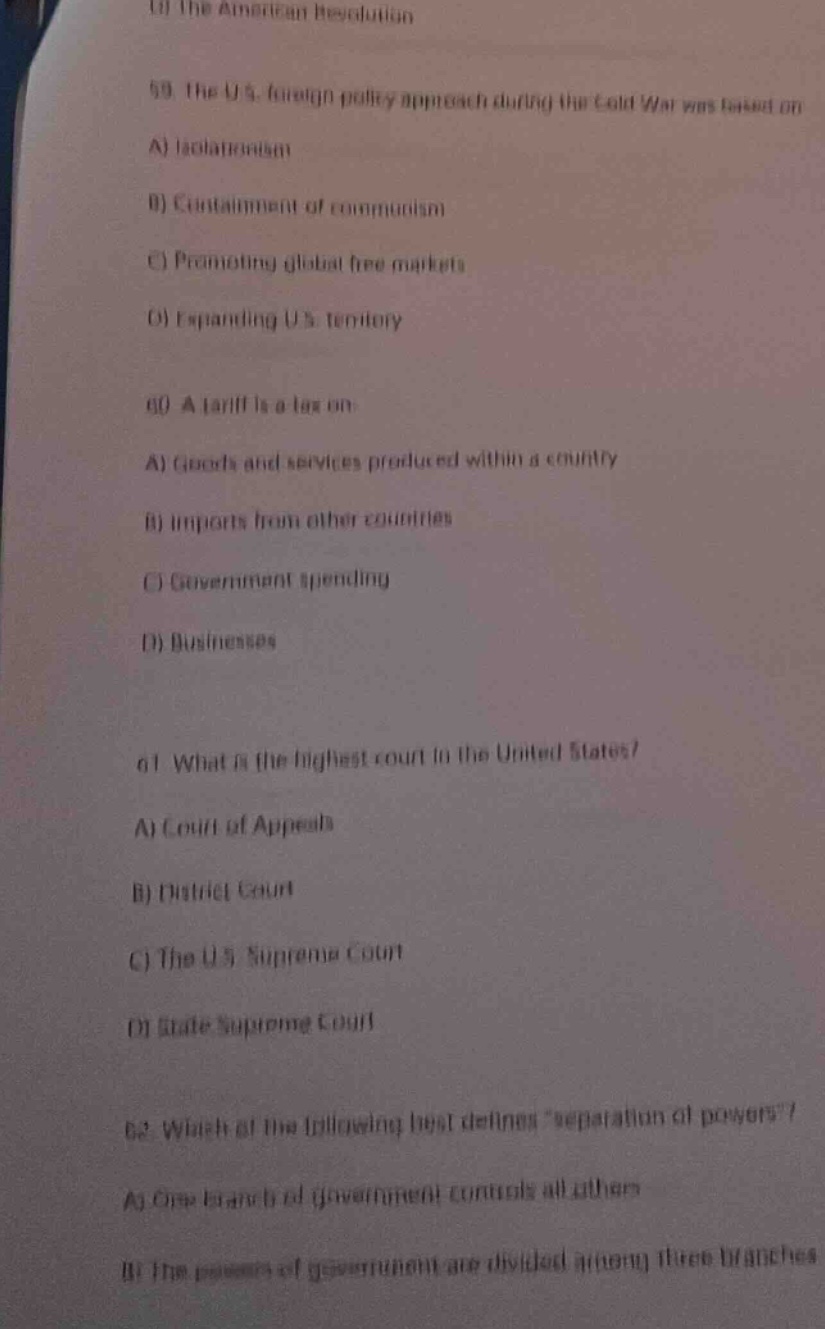
58. the u.s. foreign - policy approach during the cold war was based on\na) isolationism\nb) containment of communism\nc) promoting global free markets\nd) expanding u.s. territory\n60. a tariff is a tax on\na) goods and services produced within a country\nb) imports from other countries\nc) government spending\nd) businesses\n61. what is the highest court in the united states?\na) court of appeals\nb) district court\nc) the u.s. supreme court\nd) state supreme court\n62. which of the following best defines “separation of powers”?\na) one branch of government controls all others\nb) the powers of government are divided among three branches
Answer
Answer:
- B. Containment of communism
- B. Imports from other countries
- C. The U.S. Supreme Court
- B. The powers of government are divided among three branches
Brief Explanations:
- The U.S. foreign - policy during the Cold War was based on containing the spread of communism.
- A tariff is a tax on imported goods from other countries.
- The U.S. Supreme Court is the highest court in the United States.
- Separation of powers means dividing government powers among the legislative, executive, and judicial branches.