analyze\nplace the moons in the boxes below to show the order in which the phases are viewed from the earth…
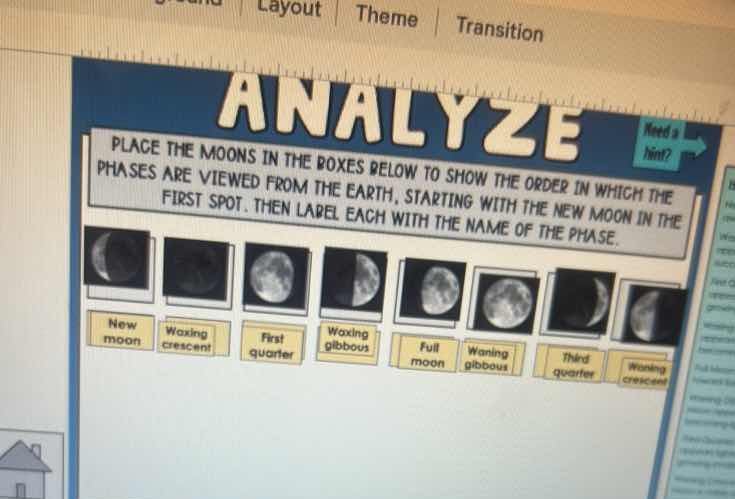
analyze\nplace the moons in the boxes below to show the order in which the phases are viewed from the earth, starting with the new moon in the first spot. then label each with the name of the phase.\nnew moon, waxing crescent, first quarter, waxing gibbous, full moon, waning gibbous, third quarter, waning crescent.
Answer
Brief Explanations:
The lunar cycle consists of eight distinct phases determined by the Moon's position relative to the Earth and Sun. The cycle begins with the New Moon (completely dark). As the illuminated portion increases (waxing), it progresses through the Waxing Crescent, First Quarter (half-lit on the right), and Waxing Gibbous. After the Full Moon (fully lit), the illuminated portion decreases (waning), moving through the Waning Gibbous, Third Quarter (half-lit on the left), and Waning Crescent before returning to a New Moon.
Answer:
The correct order of the lunar phases and their corresponding visual descriptions are:
- New Moon: The moon is completely dark.
- Waxing Crescent: A small sliver of light is visible on the right side.
- First Quarter: The right half of the moon is illuminated.
- Waxing Gibbous: Most of the moon is lit on the right, with a small dark sliver on the left.
- Full Moon: The entire side facing Earth is fully illuminated.
- Waning Gibbous: Most of the moon is lit on the left, with a small dark sliver on the right.
- Third Quarter: The left half of the moon is illuminated.
- Waning Crescent: A small sliver of light is visible on the left side.