in the article, the author discussed the difficulty that the united nations had in drafting a definition of…
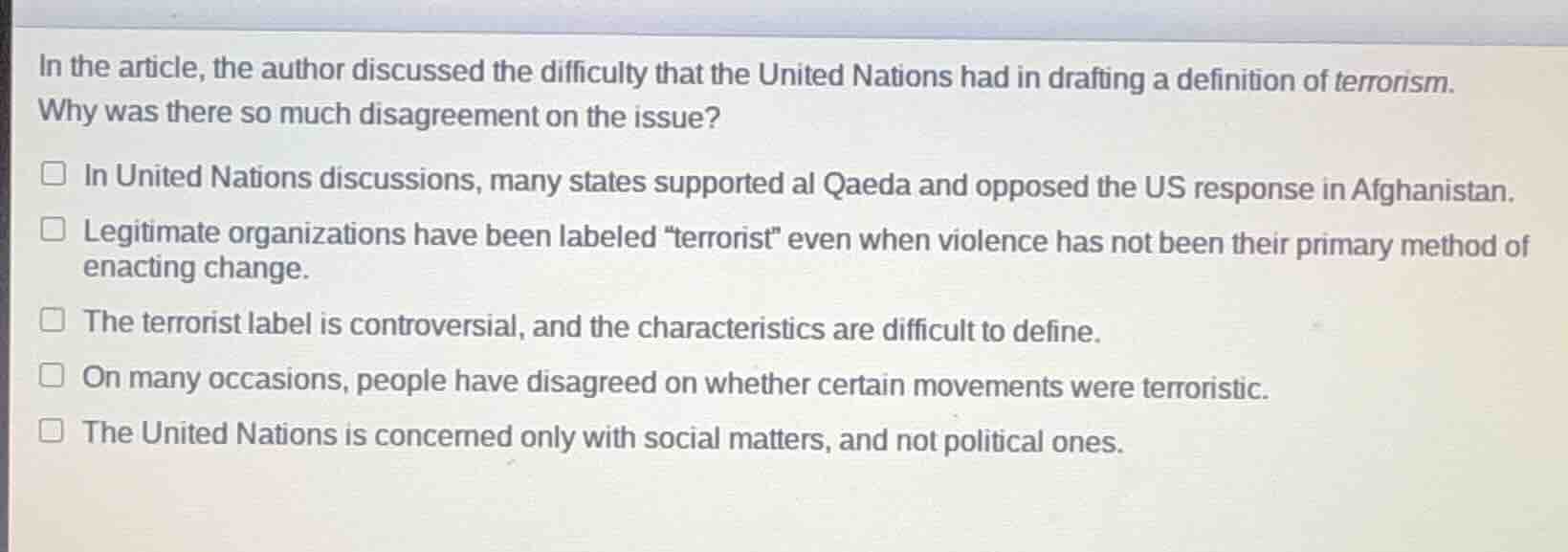
in the article, the author discussed the difficulty that the united nations had in drafting a definition of terrorism.\nwhy was there so much disagreement on the issue?\n□ in united nations discussions, many states supported al qaeda and opposed the us response in afghanistan.\n□ legitimate organizations have been labeled \terrorist\ even when violence has not been their primary method of enacting change.\n□ the terrorist label is controversial, and the characteristics are difficult to define.\n□ on many occasions, people have disagreed on whether certain movements were terroristic.\n□ the united nations is concerned only with social matters, and not political ones.
Answer
Brief Explanations:
- The first option is false; UN member states do not support al-Qaeda, a designated terrorist group.
- The second option is a contributing issue: groups using non-violent primary tactics being labeled terrorist creates disagreement over the definition's scope.
- The third option is core: the label itself is contentious, with no universal agreement on defining traits like target type, violence use, or motive.
- The fourth option is key: there is widespread disagreement on categorizing specific movements (e.g., liberation movements vs. terrorism) due to differing national/ideological perspectives.
- The fifth option is false; the UN addresses both social and political matters.
Answer:
- Legitimate organizations have been labeled "terrorist" even when violence has not been their primary method of enacting change.
- The terrorist label is controversial, and the characteristics are difficult to define.
- On many occasions, people have disagreed on whether certain movements were terroristic.