the bagel data also reflect how much personal mood seems to affect honesty. weather, for instance, is a…
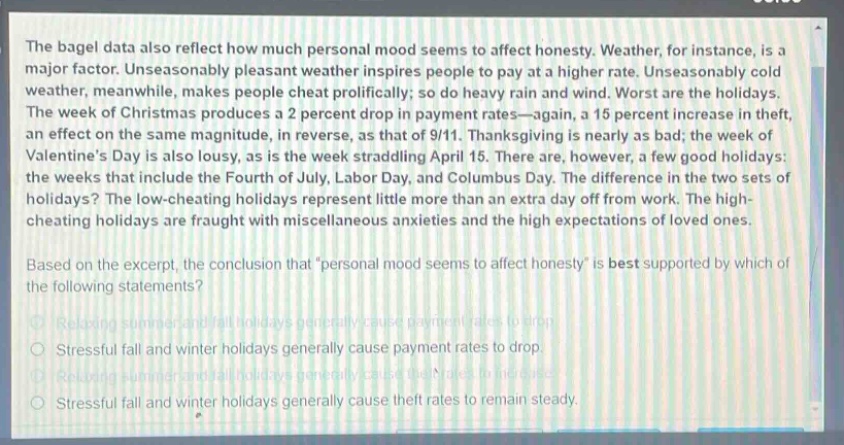
the bagel data also reflect how much personal mood seems to affect honesty. weather, for instance, is a major factor. unseasonably pleasant weather inspires people to pay at a higher rate. unseasonably cold weather, meanwhile, makes people cheat prolifically; so do heavy rain and wind. worst are the holidays. the week of christmas produces a 2 percent drop in payment rates—again, a 15 percent increase in theft, an effect on the same magnitude, in reverse, as that of 9/11. thanksgiving is nearly as bad; the week of valentines day is also lousy, as is the week straddling april 15. there are, however, a few good holidays: the weeks that include the fourth of july, labor day, and columbus day. the difference in the two sets of holidays? the low - cheating holidays represent little more than an extra day off from work. the high - cheating holidays are fraught with miscellaneous anxieties and the high expectations of loved ones. based on the excerpt, the conclusion that “personal mood seems to affect honesty” is best supported by which of the following statements? relaxing summer and fall holidays generally cause payment rates to drop. stressful fall and winter holidays generally cause payment rates to drop. relaxing summer and fall holidays generally cause theft rates to increase. stressful fall and winter holidays generally cause theft rates to remain steady.
Answer
Brief Explanations:
The text mentions that high - cheating holidays are those fraught with anxieties and high expectations, like Christmas and Thanksgiving (fall and winter holidays), and they cause a drop in payment rates and an increase in theft. This shows that personal mood affected by such stressful holidays impacts honesty.
Answer:
B. Stressful fall and winter holidays generally cause payment rates to drop.