based on the new york times v. united states case, when might it be acceptable for the government to…
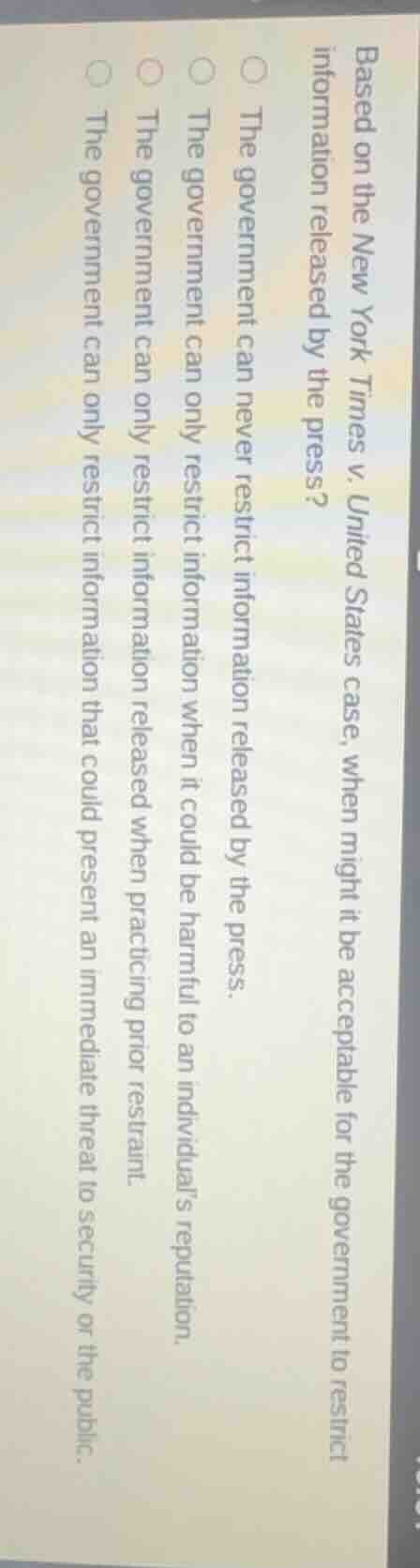
based on the new york times v. united states case, when might it be acceptable for the government to restrict information released by the press?\n\n- the government can never restrict information released by the press.\n- the government can only restrict information when it could be harmful to an individuals reputation.\n- the government can only restrict information released when practicing prior restraint.\n- the government can only restrict information that could present an immediate threat to security or the public.
Answer
Brief Explanations:
In the landmark Supreme Court case New York Times Co. v. United States (1971), also known as the "Pentagon Papers" case, the Court established a very high bar for the government to exercise "prior restraint" (censorship before publication). The ruling held that the government carries a heavy burden of proof to justify such a restraint. The majority opinion and subsequent legal interpretations indicate that the government can only restrict publication if it can prove that the information would cause direct, immediate, and irreparable harm to national security or the safety of the public. General claims of embarrassment or potential harm are insufficient to overcome the First Amendment protection of a free press.
Answer:
The government can only restrict information that could present an immediate threat to security or the public.