which best explains how state legislative branches are structured?\nmost states have legislatures with a…
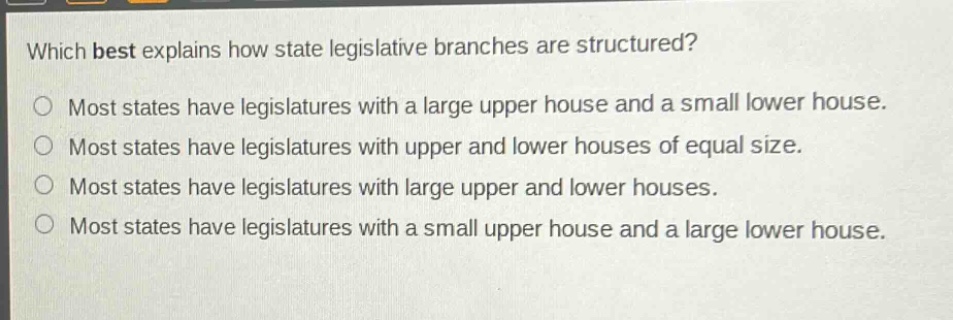
which best explains how state legislative branches are structured?\nmost states have legislatures with a large upper house and a small lower house.\nmost states have legislatures with upper and lower houses of equal size.\nmost states have legislatures with large upper and lower houses.\nmost states have legislatures with a small upper house and a large lower house.
Answer
Brief Explanations:
In the United States, most state legislatures follow a bicameral system. The upper - house (such as state senates) usually has fewer members as it often represents larger geographical areas or has more deliberative functions. The lower - house (such as state houses of representatives) has more members as it represents smaller districts and is more directly connected to the population.
Answer:
Most states have legislatures with a small upper house and a large lower house.