consider this claim: prescription drugs should not be advertised directly to consumers because of the…
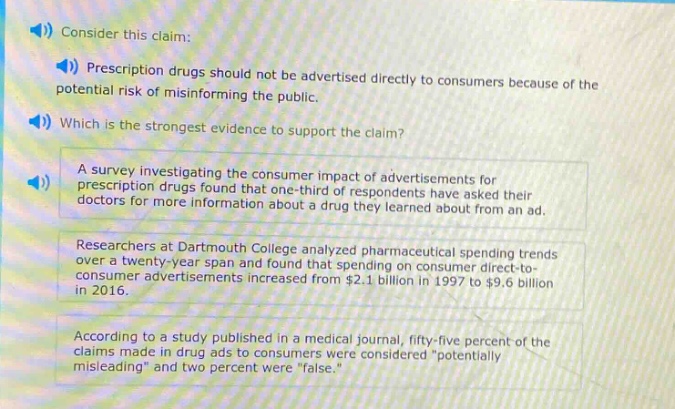
consider this claim: prescription drugs should not be advertised directly to consumers because of the potential risk of misinforming the public. which is the strongest evidence to support the claim? a survey investigating the consumer impact of advertisements for prescription drugs found that one - third of respondents have asked their doctors for more information about a drug they learned about from an ad. researchers at dartmouth college analyzed pharmaceutical spending trends over a twenty - year span and found that spending on consumer direct - to - consumer advertisements increased from $2.1 billion in 1997 to $9.6 billion in 2016. according to a study published in a medical journal, fifty - five percent of the claims made in drug ads to consumers were considered “potentially misleading” and two percent were “false.”
Answer
Brief Explanations:
The claim is about potential misinformation in direct - to - consumer prescription drug advertising. The first option shows consumers asking for more info, not misinformation. The second option is about spending trends, not misinformation. The third option directly states that a large percentage of drug ad claims were potentially misleading or false, which strongly supports the claim.
Answer:
According to a study published in a medical journal, fifty - five percent of the claims made in drug ads to consumers were considered "potentially misleading" and two percent were "false."