which correctly lists the three isotopes that geologists measure to determine the age of an organisms…
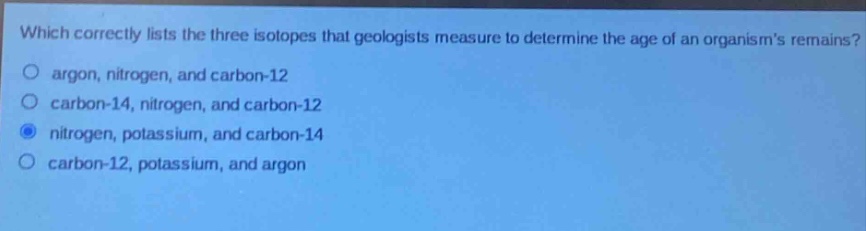
which correctly lists the three isotopes that geologists measure to determine the age of an organisms remains?\nargon, nitrogen, and carbon - 12\ncarbon - 14, nitrogen, and carbon - 12\nnitrogen, potassium, and carbon - 14\ncarbon - 12, potassium, and argon
Answer
Brief Explanations:
Geologists use radiocarbon dating which involves carbon - 14. Carbon - 12 is a stable isotope of carbon and is not used for age - determination in the same context as carbon - 14. Nitrogen is not one of the main isotopes used for determining the age of an organism's remains. Potassium - argon dating is another method used for dating rocks and minerals, but for organic remains, carbon - 14 is key. The correct combination for organic remains is carbon - 14 along with stable carbon - 12 for comparison and sometimes other isotopes in related dating techniques, but carbon - 14 is the most important for organic material age - determination.
Answer:
None of the above options are correct. The most well - known isotope for determining the age of an organism's remains is carbon - 14. While carbon - 12 is present as a stable carbon isotope, nitrogen and potassium are not typically part of the main isotopes used for this specific organic - remains age - determination. If we had to choose the closest in terms of having carbon - 14, the best option among the given ones would be the one with carbon - 14 in it, but still, the combinations are incorrect in a strict sense.