crimes are usually sorted into misdemeanors and felonies. here are some differences between the two:\n\n*…
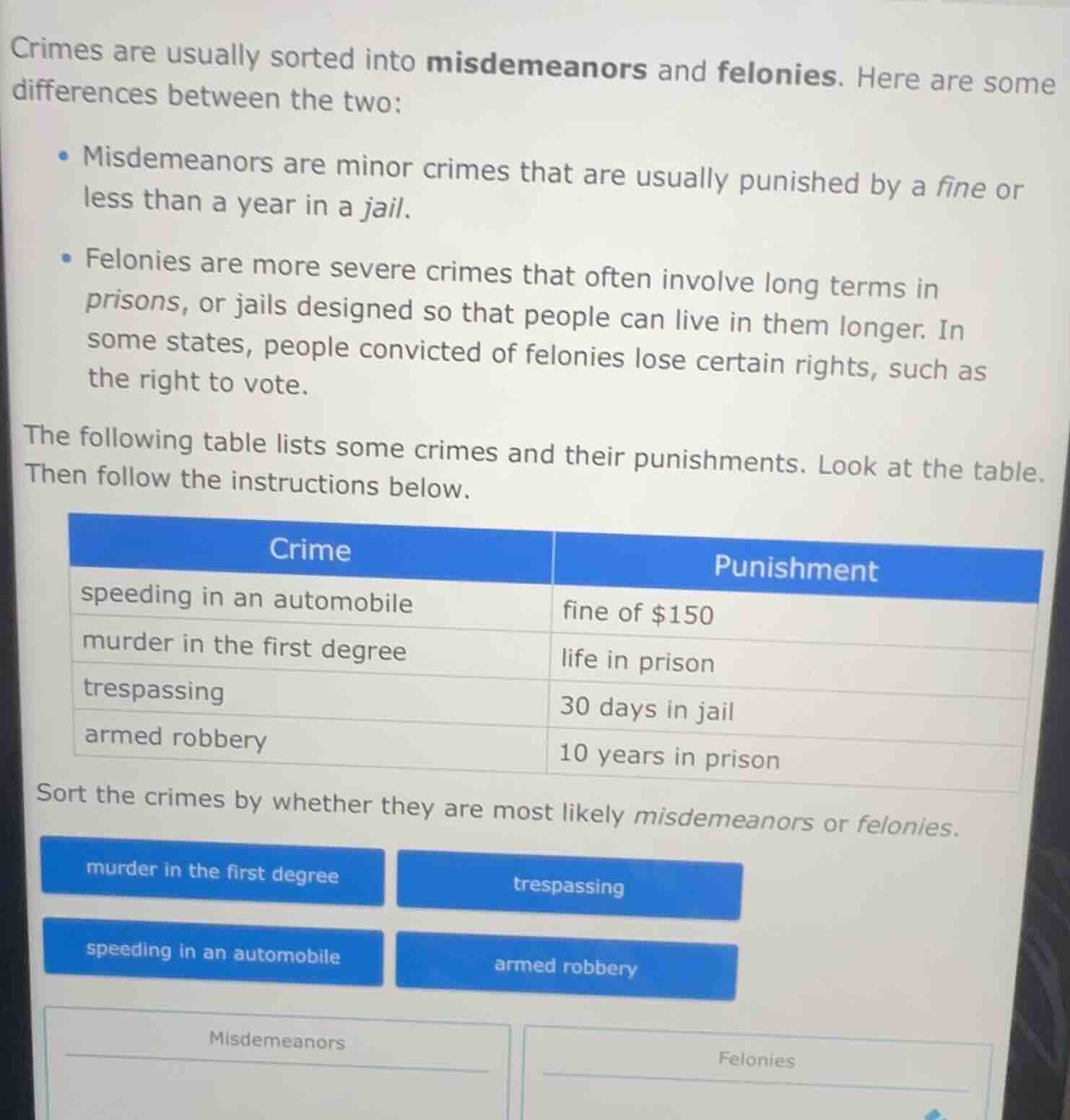
crimes are usually sorted into misdemeanors and felonies. here are some differences between the two:\n\n* misdemeanors are minor crimes that are usually punished by a fine or less than a year in a jail.\n* felonies are more severe crimes that often involve long terms in prisons, or jails designed so that people can live in them longer. in some states, people convicted of felonies lose certain rights, such as the right to vote.\n\nthe following table lists some crimes and their punishments. look at the table. then follow the instructions below.\n\n| crime | punishment |\n| :--- | :--- |\n| speeding in an automobile | fine of $150 |\n| murder in the first degree | life in prison |\n| trespassing | 30 days in jail |\n| armed robbery | 10 years in prison |\n\nsort the crimes by whether they are most likely misdemeanors or felonies.\n\nmurder in the first degree\ntrespassing\nspeeding in an automobile\narmed robbery\n\nmisdemeanors\nfelonies
Answer
Brief Explanations:
Based on the provided definitions, misdemeanors are minor crimes punished by fines or less than a year in jail, while felonies are severe crimes involving long prison terms.
- Speeding in an automobile is punished by a fine of $$150$, fitting the misdemeanor definition.
- Trespassing is punished by 30 days in jail (less than a year), fitting the misdemeanor definition.
- Murder in the first degree is punished by life in prison, fitting the felony definition.
- Armed robbery is punished by 10 years in prison, fitting the felony definition.
Answer:
Misdemeanors: speeding in an automobile, trespassing Felonies: murder in the first degree, armed robbery