critical thinking questions: 1. compare and contrast the air quality challenges faced by developed and…
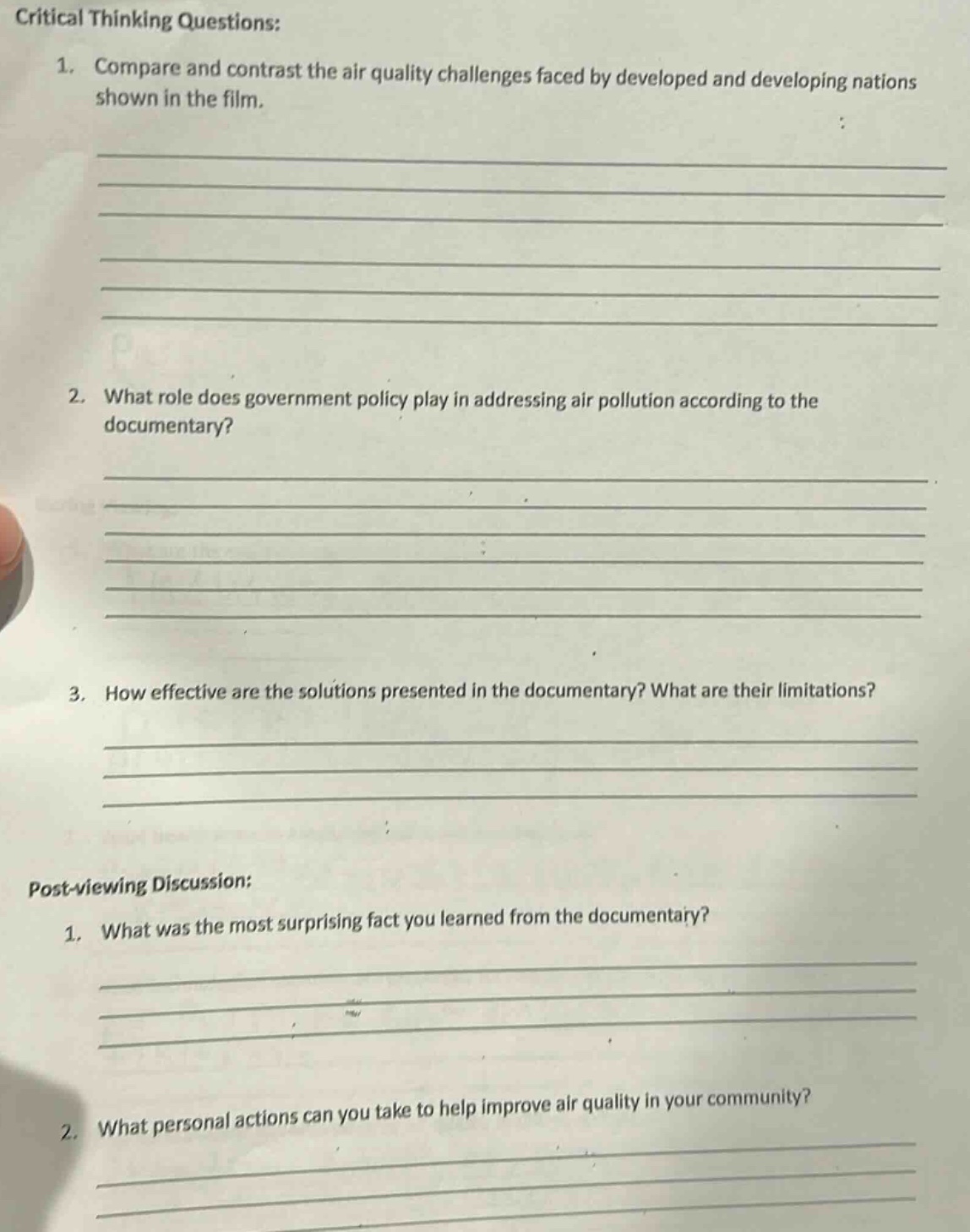
critical thinking questions: 1. compare and contrast the air quality challenges faced by developed and developing nations shown in the film. 2. what role does government policy play in addressing air pollution according to the documentary? 3. how effective are the solutions presented in the documentary? what are their limitations? post - viewing discussion: 1. what was the most surprising fact you learned from the documentary? 2. what personal actions can you take to help improve air quality in your community?
Answer
Brief Explanations:
- Developed nations often face legacy - pollution issues and need to balance economic growth with maintaining air quality. They may have more resources for research and advanced technologies but also complex regulatory landscapes. Developing nations are dealing with rapid industrialization and urbanization, leading to high levels of emissions from new sources. They may lack the financial and technological means to address air quality effectively.
- Government policies can set emission standards, provide incentives for clean technologies, and regulate industrial activities. They can also invest in public transportation and green spaces. However, enforcement can be a challenge, and there may be political and economic pressures that limit the effectiveness of policies.
- The effectiveness of solutions depends on factors like cost - effectiveness, public acceptance, and technological feasibility. Limitations may include high costs, lack of infrastructure to support new technologies, and resistance from industries. For the post - viewing discussion, the most surprising fact would vary from person to person based on their prior knowledge. Personal actions to improve air quality can include using public transport, reducing energy consumption at home, and supporting local environmental initiatives.
Answer:
- Developed nations: Legacy pollution, resource - rich but complex regulations. Developing nations: Rapid industrialization, lack of resources for air quality improvement.
- Sets standards, provides incentives, regulates, but faces enforcement and political challenges.
- Effectiveness varies by factors; limitations include cost, infrastructure, and industry resistance. Post - viewing Discussion:
- Varies by individual prior knowledge.
- Use public transport, reduce energy use, support local initiatives.