decide whether each strategy is effective or ineffective for a public speaker. using informal language…
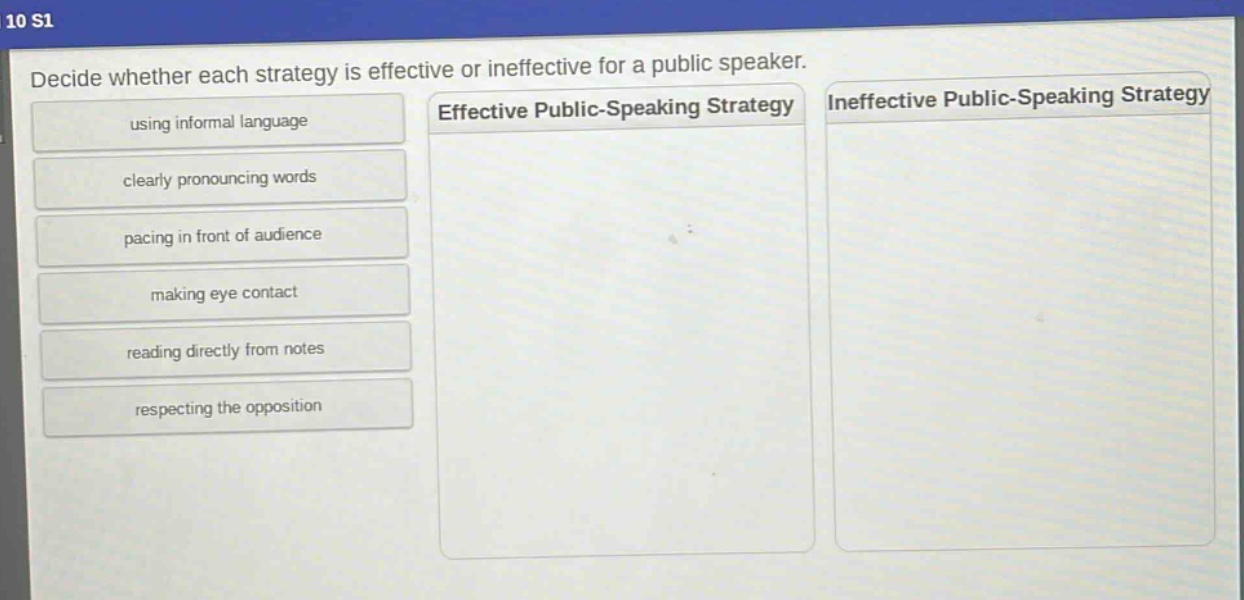
decide whether each strategy is effective or ineffective for a public speaker. using informal language clearly pronouncing words pacing in front of audience making eye contact reading directly from notes respecting the opposition effective public - speaking strategy ineffective public - speaking strategy
Answer
Brief Explanations:
- Using informal language: Can be effective in casual - friendly settings, but may be ineffective in formal or professional ones.
- Clearly pronouncing words: Essential for audience understanding, so effective.
- Pacing in front of audience: Can be distracting, so ineffective.
- Making eye contact: Builds connection, so effective.
- Reading directly from notes: Can seem unengaging, so ineffective.
- Respecting the opposition: Shows professionalism, so effective.
Answer:
- using informal language: Depends on context
- clearly pronouncing words: Effective Public - Speaking Strategy
- pacing in front of audience: Ineffective Public - Speaking Strategy
- making eye contact: Effective Public - Speaking Strategy
- reading directly from notes: Ineffective Public - Speaking Strategy
- respecting the opposition: Effective Public - Speaking Strategy