earths surface is constantly changed by erosion and deposition. erosion breaks down earths surface by…
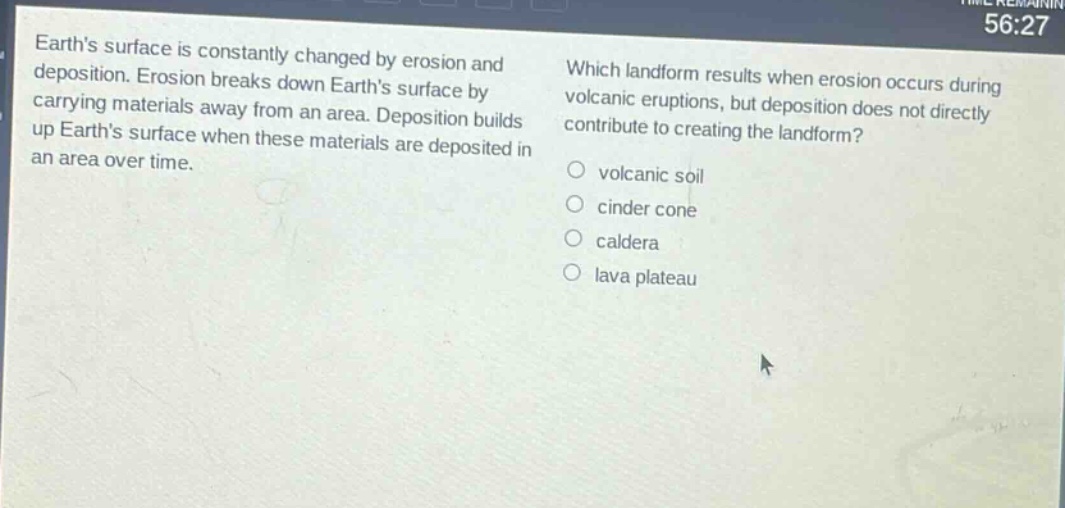
earths surface is constantly changed by erosion and deposition. erosion breaks down earths surface by carrying materials away from an area. deposition builds up earths surface when these materials are deposited in an area over time. which landform results when erosion occurs during volcanic eruptions, but deposition does not directly contribute to creating the landform? volcanic soil cinder cone caldera lava plateau
Answer
Brief Explanations:
A caldera is formed by the collapse of a volcano after a large - scale eruption, mainly due to erosion - like processes during the eruption and not directly by deposition. Volcanic soil is formed by deposition of volcanic materials over time. A cinder cone is built up by the deposition of pyroclastic materials. A lava plateau is formed by the repeated deposition of lava flows.
Answer:
caldera