which event is most likely if an index fossil is found in a layer at location 1, but the layer and index…
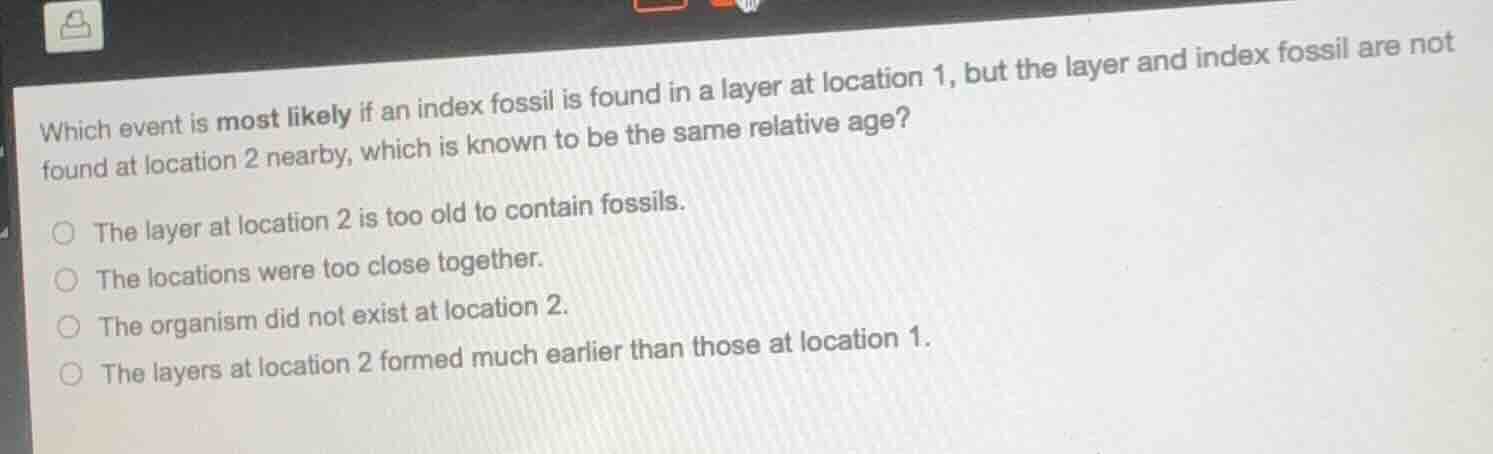
which event is most likely if an index fossil is found in a layer at location 1, but the layer and index fossil are not found at location 2 nearby, which is known to be the same relative age?○ the layer at location 2 is too old to contain fossils.○ the locations were too close together.○ the organism did not exist at location 2.○ the layers at location 2 formed much earlier than those at location 1.
Answer
Answer:
C. The organism did not exist at location 2.
Brief Explanations:
Index fossils are used to define and identify geologic periods. If an index fossil is found in a layer at location 1, but not at location 2, even if the layers are of the same relative age, it suggests that the organism that formed the index fossil did not inhabit location 2 during that specific geological period. The other options are less likely: a layer being "too old to contain fossils" is generally not the case for layers of the same relative age, locations being "too close together" doesn't explain the absence, and layers forming "much earlier" contradicts the premise of them being the "same relative age."