what factor do plessy v. ferguson, brown v. board of education, and regents of california v. bakke have in…
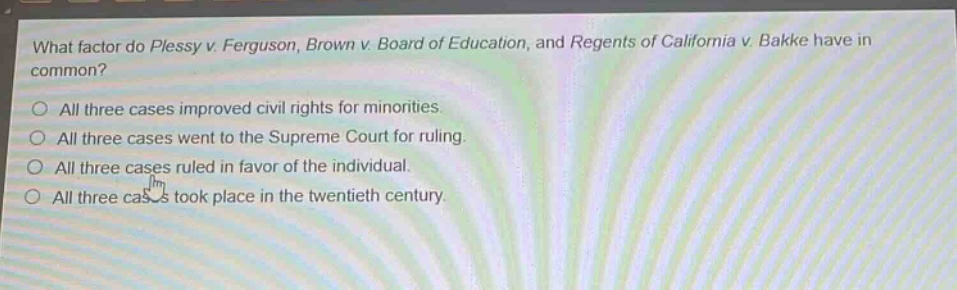
what factor do plessy v. ferguson, brown v. board of education, and regents of california v. bakke have in common?\no all three cases improved civil rights for minorities.\no all three cases went to the supreme court for ruling.\no all three cases ruled in favor of the individual.\no all three cases took place in the twentieth century.
Answer
Brief Explanations:
Plessy v. Ferguson, Brown v. Board of Education, and Regents of California v. Bakke are all well - known legal cases that were heard and decided by the U.S. Supreme Court. Plessy v. Ferguson established the "separate but equal" doctrine in 1896 (not all in 20th century), it was not a victory for minorities as it upheld segregation. Brown v. Board of Education in 1954 overturned segregation in schools and was a win for minorities. Regents of California v. Bakke in 1978 dealt with affirmative action in college admissions. Not all ruled in favor of the individual in a straightforward sense. But all were Supreme Court cases.
Answer:
All three cases went to the Supreme Court for ruling.