the u.s. government is controlled through the separation of powers and a system of checks and balances…
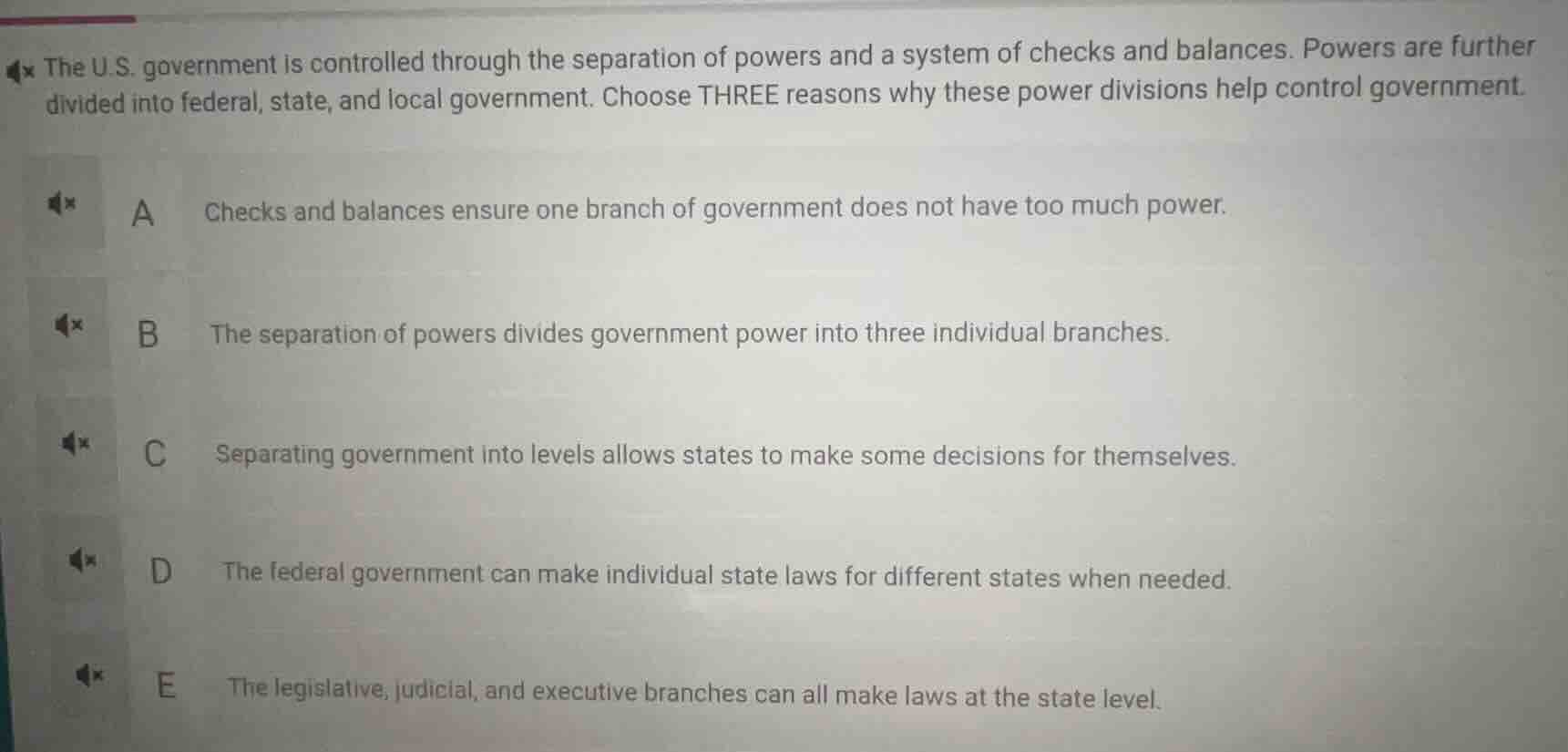
the u.s. government is controlled through the separation of powers and a system of checks and balances. powers are further divided into federal, state, and local government. choose three reasons why these power divisions help control government.\n\na checks and balances ensure one branch of government does not have too much power.\nb the separation of powers divides government power into three individual branches.\nc separating government into levels allows states to make some decisions for themselves.\nd the federal government can make individual state laws for different states when needed.\ne the legislative, judicial, and executive branches can all make laws at the state level.
Answer
Brief Explanations:
The U.S. government utilizes several mechanisms to prevent the concentration of power and ensure accountability.
- Checks and Balances: This system allows each branch of government to amend or veto acts of another branch, preventing any single entity from becoming too powerful.
- Separation of Powers: This principle divides the federal government into three distinct branches (Legislative, Executive, and Judicial), each with its own specific responsibilities and powers.
- Federalism: By dividing power between the national (federal) government and state governments, the system ensures that states retain sovereignty over local matters, providing a further layer of control and representation.
Options D and E are incorrect because the federal government does not typically make laws for individual states (states make their own), and only the legislative branch is responsible for making laws, not all three branches.
Answer:
A. Checks and balances ensure one branch of government does not have too much power. B. The separation of powers divides government power into three individual branches. C. Separating government into levels allows states to make some decisions for themselves.