what idea was the decision in griswold v. connecticut based upon?\nif the constitution forbids self…
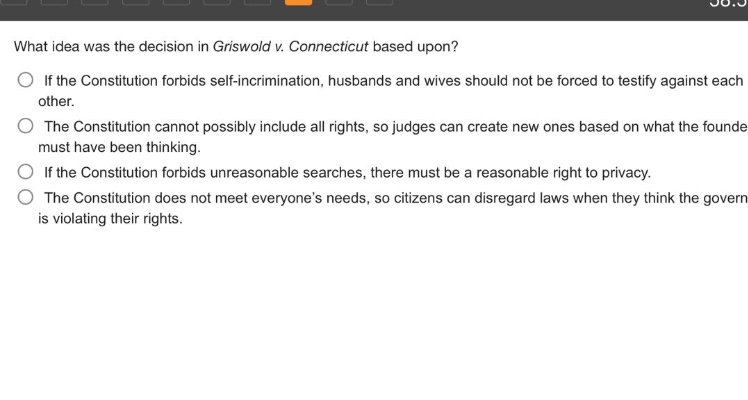
what idea was the decision in griswold v. connecticut based upon?\nif the constitution forbids self - incrimination, husbands and wives should not be forced to testify against each other.\nthe constitution cannot possibly include all rights, so judges can create new ones based on what the founders must have been thinking.\nif the constitution forbids unreasonable searches, there must be a reasonable right to privacy.\nthe constitution does not meet everyone’s needs, so citizens can disregard laws when they think the government is violating their rights.
Answer
Brief Explanations:
The Griswold v. Connecticut case established a right - to - privacy based on the Fourth Amendment's prohibition of unreasonable searches. The idea is that if the government cannot conduct unreasonable searches, there must be an underlying right to privacy.
Answer:
If the Constitution forbids unreasonable searches, there must be a reasonable right to privacy.