identify some reasons why mears considers modeling an occupation rather than a profession.\n\nreason(s)\n\nmo…
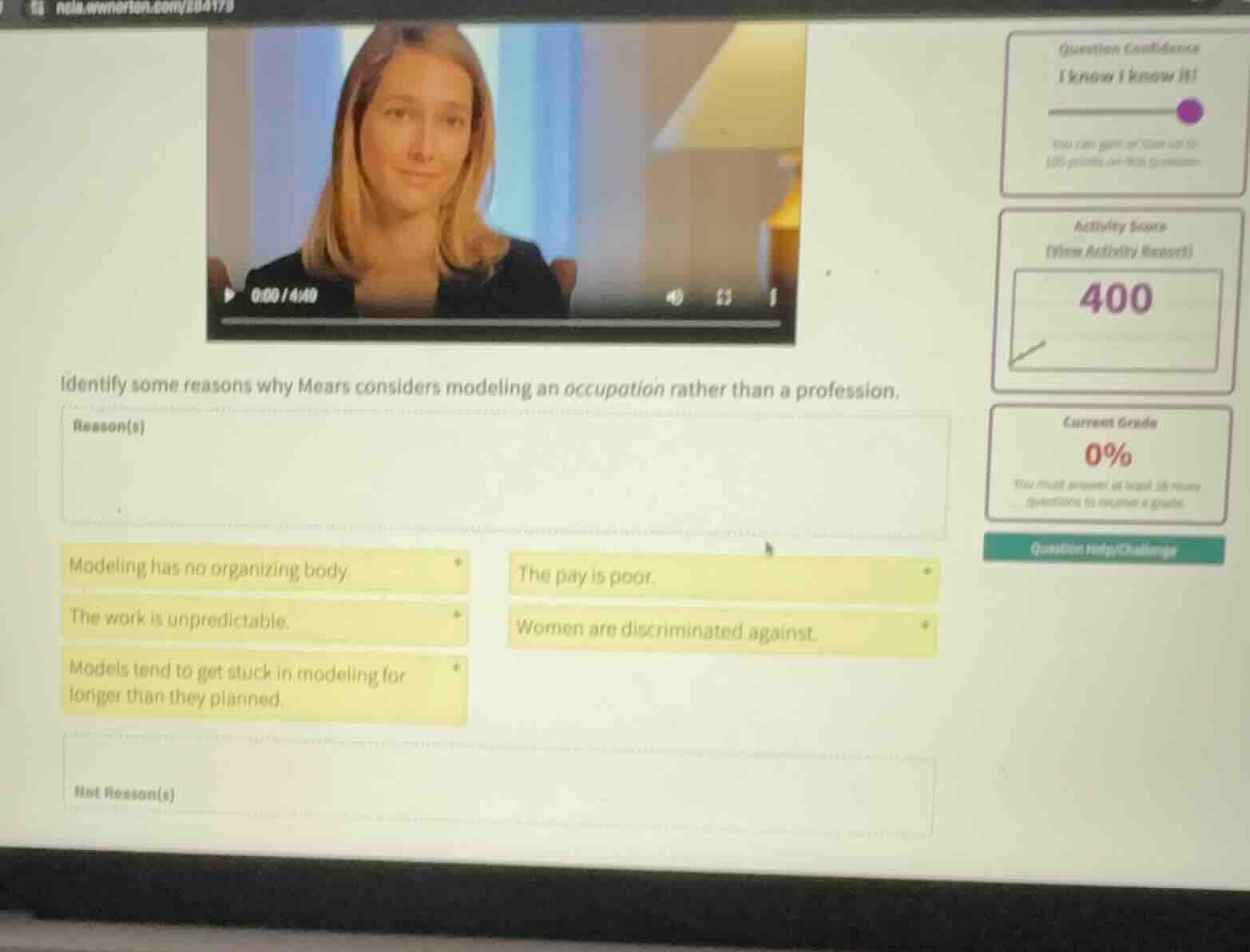
identify some reasons why mears considers modeling an occupation rather than a profession.\n\nreason(s)\n\nmodeling has no organizing body.\nthe work is unpredictable.\nmodels tend to get stuck in modeling for longer than they planned.\nthe pay is poor.\nwomen are discriminated against.\n\nnot reason(s)
Answer
Brief Explanations:
Ashley Mears, a sociologist who studied the fashion industry, distinguishes between a "profession" and an "occupation" based on structural characteristics. In her research, she notes that modeling lacks the formal institutional structures typically associated with professions, such as a central organizing body or licensing requirements. Furthermore, the work is characterized by extreme unpredictability in terms of scheduling and income. While models often intend for the career to be short-term, many find themselves staying longer than planned due to the "lottery" nature of the industry. Conversely, while pay can be unequal, "poor pay" is not the defining reason it isn't a profession, and while gender dynamics are complex, "discrimination against women" is not the specific sociological reason Mears uses to categorize it as an occupation rather than a profession (in fact, women often out-earn men in modeling).
Answer:
Reason(s):
- Modeling has no organizing body.
- The work is unpredictable.
- Models tend to get stuck in modeling for longer than they planned.
Not Reason(s):
- The pay is poor.
- Women are discriminated against.