the image shows cross - cutting relationships. b, w, e, and k represent rock layers, and q represents a…
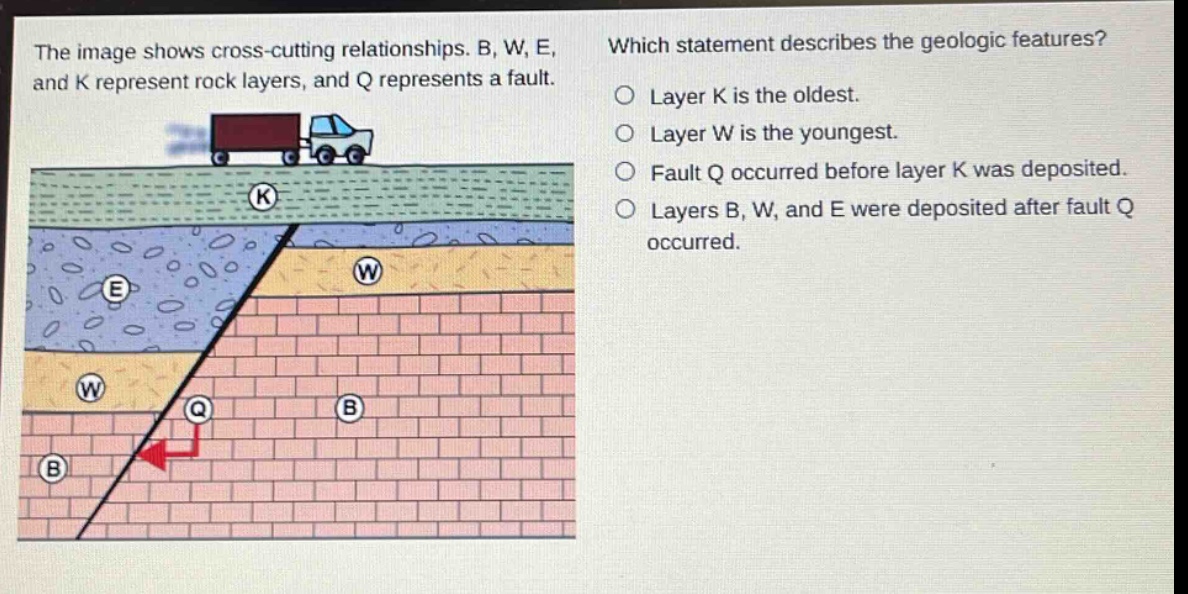
the image shows cross - cutting relationships. b, w, e, and k represent rock layers, and q represents a fault. which statement describes the geologic features? layer k is the oldest. layer w is the youngest. fault q occurred before layer k was deposited. layers b, w, and e were deposited after fault q occurred.
Answer
Brief Explanations:
The principle of cross - cutting relationships states that a fault or intrusion is younger than the rocks it cuts through. Fault Q cuts through layers B, W, and E, so these layers must be older than the fault. Layer K is not cut by the fault and lies on top of other layers, indicating it is the youngest. Layer B is the oldest among B, W, E as it is at the bottom of these three. Since the fault cuts through B, W, and E, they were deposited before the fault.
Answer:
Layers B, W, and E were deposited before fault Q occurred. None of the given options are correct.