in interpreting the fourth amendment, the supreme court has ruled that police always need a warrant to…
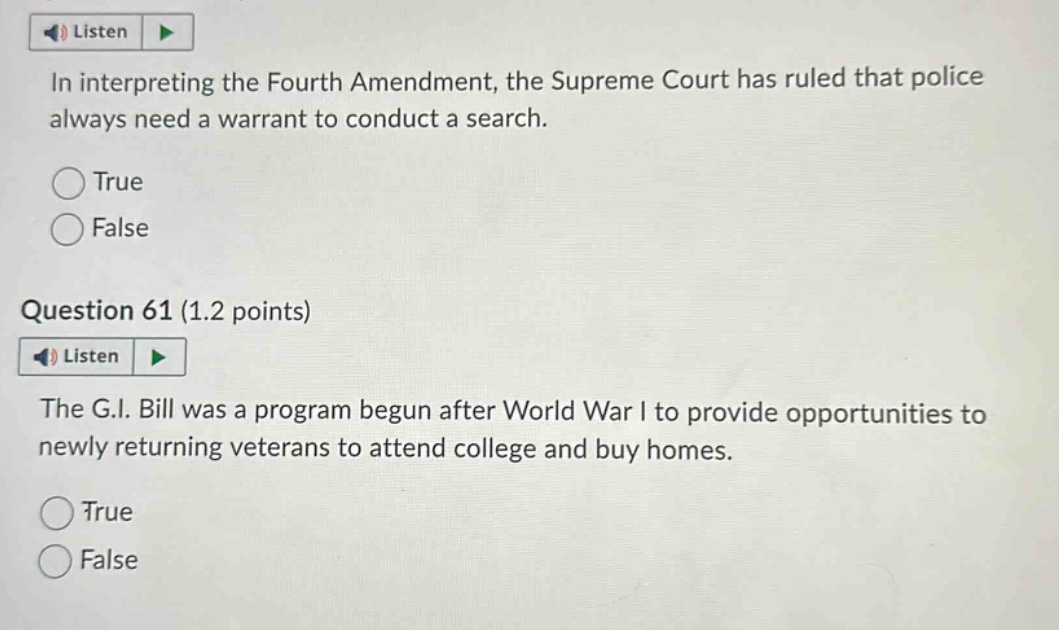
in interpreting the fourth amendment, the supreme court has ruled that police always need a warrant to conduct a search. true false question 61 (1.2 points) the g.i. bill was a program begun after world war i to provide opportunities to newly returning veterans to attend college and buy homes. true false
Answer
Brief Explanations:
For the first - question, the Supreme Court has recognized several exceptions to the warrant - requirement for searches under the Fourth Amendment, such as consent searches, searches incident to arrest, and exigent circumstances. So the statement is false. For the second question, the G.I. Bill was enacted after World War II, not World War I, to offer educational and housing opportunities to returning veterans. So it is false.
Answer:
False False