johnson, damere\n3 branches test\n10 of 20\nsubmit answers\nuse the excerpt to answer the question.\n\of all…
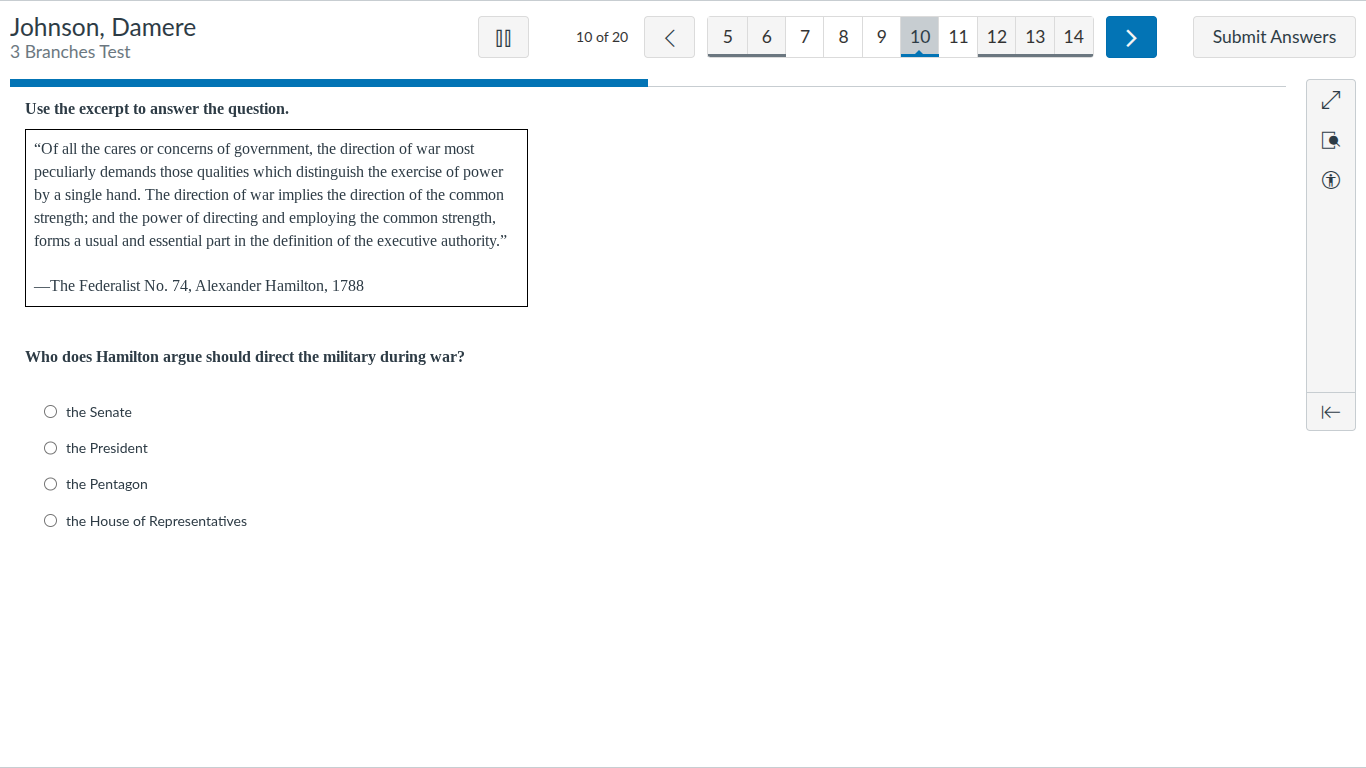
johnson, damere\n3 branches test\n10 of 20\nsubmit answers\nuse the excerpt to answer the question.\n\of all the cares or concerns of government, the direction of war most peculiarly demands those qualities which distinguish the exercise of power by a single hand. the direction of war implies the direction of the common strength; and the power of directing and employing the common strength, forms a usual and essential part in the definition of the executive authority.\\n—the federalist no. 74, alexander hamilton, 1788\nwho does hamilton argue should direct the military during war?\n○ the senate\n○ the president\n○ the pentagon\n○ the house of representatives
Answer
Brief Explanations:
The excerpt from Federalist No. 74 states that directing war requires power exercised by a single hand, and this power is part of executive authority. In the U.S. system, the President is the head of the executive branch.
Answer:
the President