which is not a major factor leading to genocide?\nunequal distribution of resources.\neconomic, political…
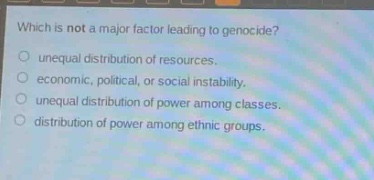
which is not a major factor leading to genocide?\nunequal distribution of resources.\neconomic, political, or social instability.\nunequal distribution of power among classes.\ndistribution of power among ethnic groups.
Answer
Answer:
There is no correct - answer option provided in the given choices as all of the options (unequal distribution of resources, economic, political, or social instability, unequal distribution of power among classes, distribution of power among ethnic groups) can be factors contributing to genocide. However, if we assume we must choose one as "not a major factor" in a relative sense, it's a very difficult call. But if we consider the most direct links to genocide, "unequal distribution of resources" might be seen as a more indirect factor compared to the others in some cases. So if forced to choose, we could say "unequal distribution of resources" is the least directly - related among them.
Brief Explanations:
Genocide is often related to power imbalances and instability. Unequal power among classes and ethnic groups can lead to persecution. Social, economic, and political instability can create an environment where genocide may occur. While unequal resource distribution can be a root cause of conflict, it is more of an underlying factor compared to power - related and instability factors in directly triggering genocide.