in miranda v. arizona (1966), why did ernesto miranda say his fifth amendment rights had been violated? he…
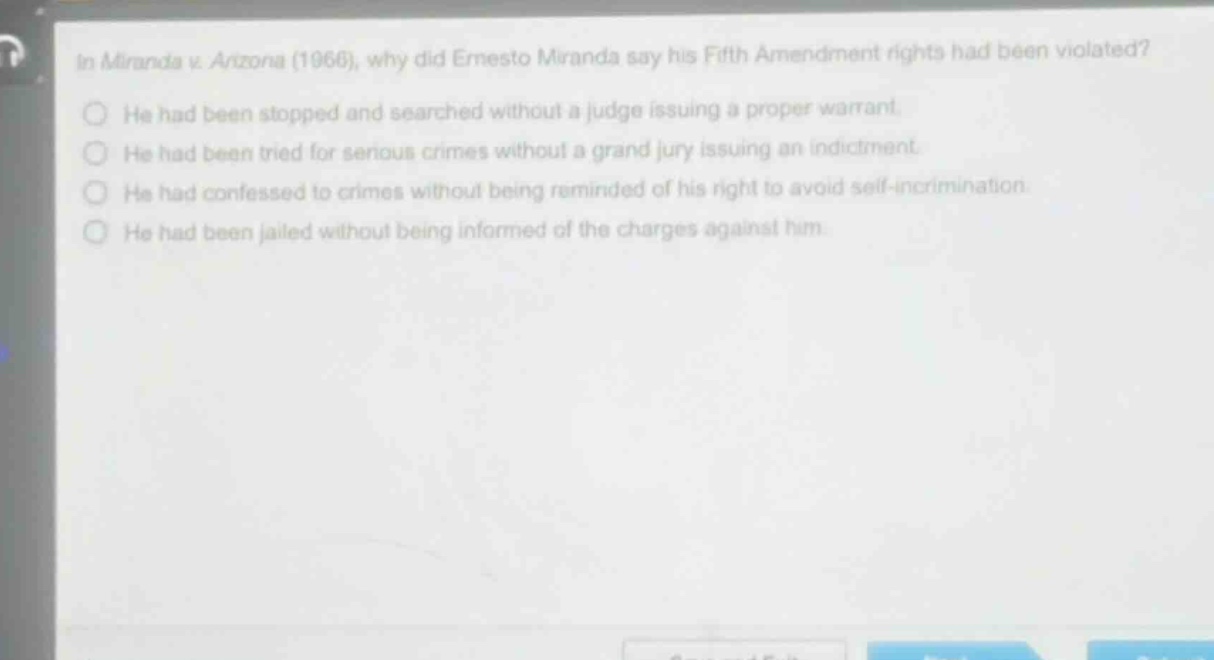
in miranda v. arizona (1966), why did ernesto miranda say his fifth amendment rights had been violated? he had been stopped and searched without a judge issuing a proper warrant. he had been tried for serious crimes without a grand jury issuing an indictment. he had confessed to crimes without being reminded of his right to avoid self - incrimination. he had been jailed without being informed of the charges against him.
Answer
Answer:
He had confessed to crimes without being reminded of his right to avoid self - incrimination.
Brief Explanations:
The Fifth Amendment includes the right against self - incrimination. In Miranda v. Arizona, Miranda argued that his confession was invalid because he was not informed of his right to remain silent (a key aspect of the right against self - incrimination) before confessing. The other options relate to different constitutional rights (e.g., Fourth Amendment for searches without a warrant, Sixth Amendment for being informed of charges).