1. multiple choice: which of the following is the primary obligation of a registered professional engineer…
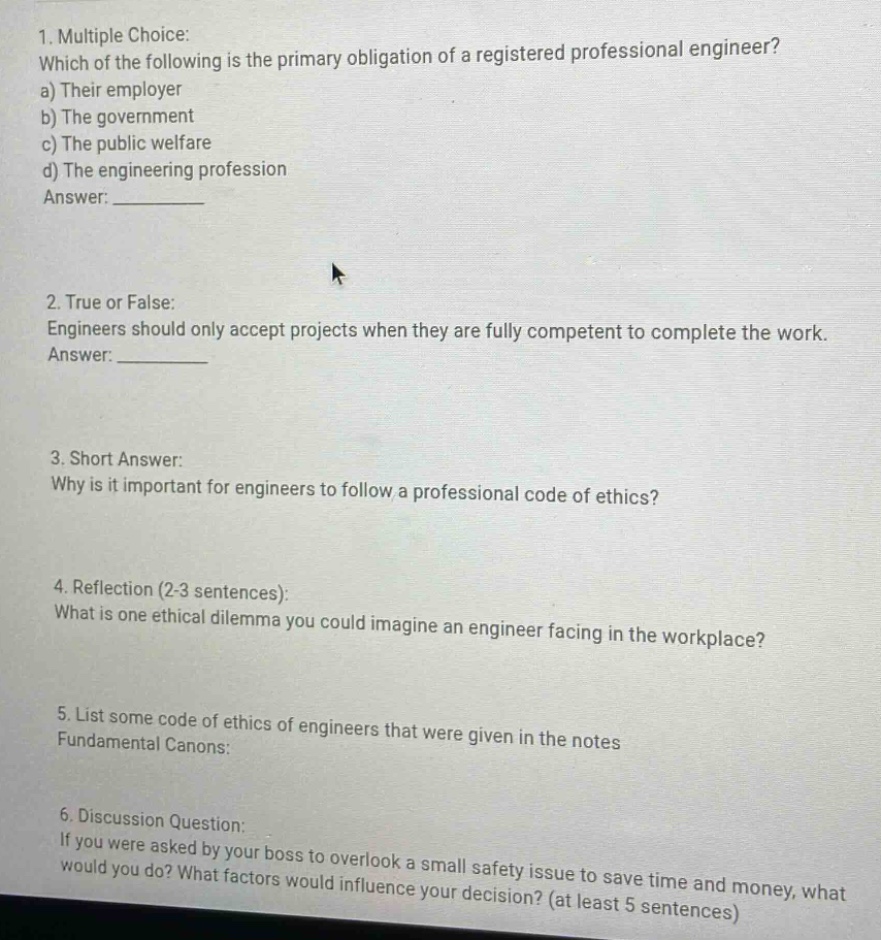
1. multiple choice: which of the following is the primary obligation of a registered professional engineer? a) their employer b) the government c) the public welfare d) the engineering profession answer: ________ 2. true or false: engineers should only accept projects when they are fully competent to complete the work. answer: ________ 3. short answer: why is it important for engineers to follow a professional code of ethics? 4. reflection (2 - 3 sentences): what is one ethical dilemma you could imagine an engineer facing in the workplace? 5. list some code of ethics of engineers that were given in the notes fundamental canons: 6. discussion question: if you were asked by your boss to overlook a small safety issue to save time and money, what would you do? what factors would influence your decision? (at least 5 sentences)
Answer
Brief Explanations:
- The primary obligation of a registered professional engineer is to the public welfare as engineers' work has a significant impact on society and public safety.
- Engineers should only accept projects they are fully competent for to ensure quality work and avoid risks.
- Following a professional code of ethics is important for engineers as it ensures public safety, builds trust in the profession, and promotes responsible and ethical behavior in engineering - related activities.
- An ethical dilemma an engineer could face is when there is pressure to cut corners on materials for cost - savings while knowing it may compromise the long - term integrity of a structure.
- Fundamental canons of engineers' code of ethics often include protecting the public health, safety, and welfare; acting with integrity, objectivity, and fairness; and continuing professional development.
- If asked by a boss to overlook a small safety issue to save time and money, one should not do it. Factors influencing the decision include the potential long - term consequences of the safety issue, the legal and ethical obligations as an engineer, the impact on the reputation of the company and the profession, and the well - being of the end - users of the product or service.
Answer:
- c) The public welfare
- True
- It ensures public safety, builds trust, and promotes ethical behavior.
- Pressure to cut corners on materials for cost - savings.
- Protect public health, safety, and welfare; act with integrity, etc.
- I would not overlook it. Factors include long - term consequences, legal/ethical obligations, reputation, and end - user well - being.