the national highway traffic safety administration (nhtsa) reported that in 2012, drivers ages 15 to 20…
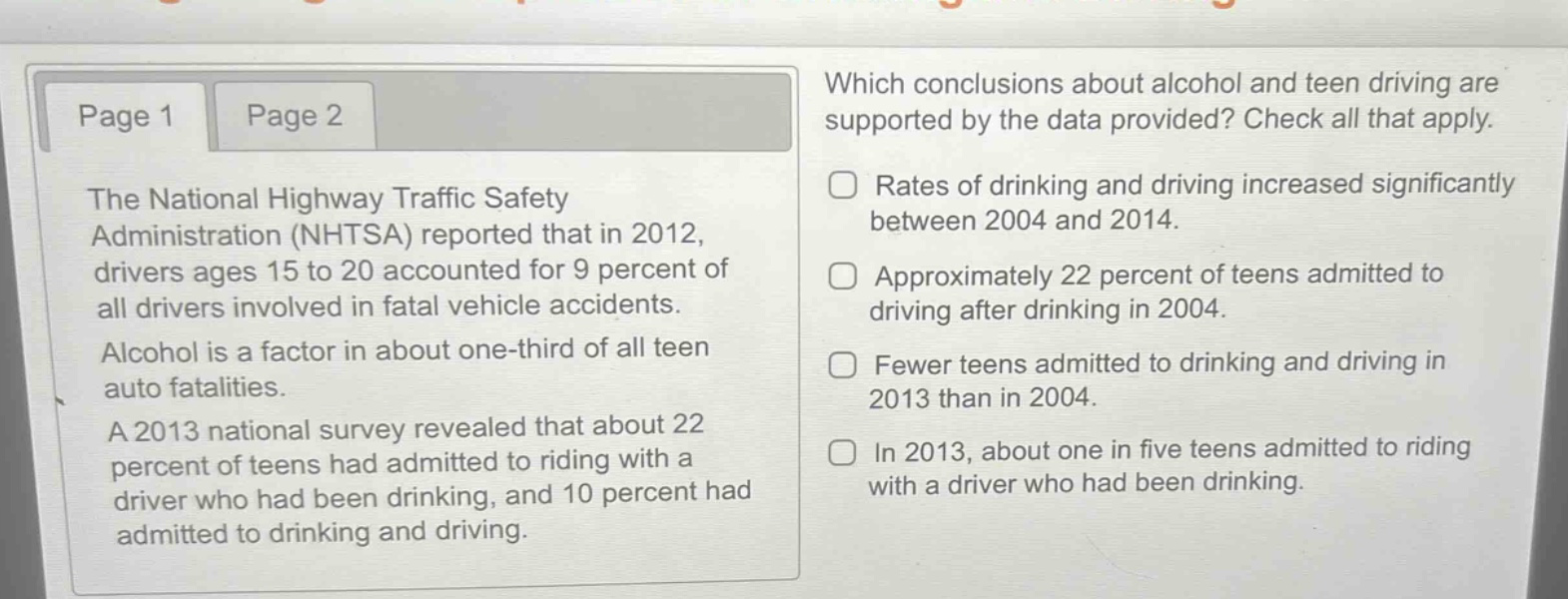
the national highway traffic safety administration (nhtsa) reported that in 2012, drivers ages 15 to 20 accounted for 9 percent of all drivers involved in fatal vehicle accidents. alcohol is a factor in about one - third of all teen auto fatalities. a 2013 national survey revealed that about 22 percent of teens had admitted to riding with a driver who had been drinking, and 10 percent had admitted to drinking and driving. which conclusions about alcohol and teen driving are supported by the data provided? check all that apply. rates of drinking and driving increased significantly between 2004 and 2014. approximately 22 percent of teens admitted to driving after drinking in 2004. fewer teens admitted to drinking and driving in 2013 than in 2004. in 2013, about one in five teens admitted to riding with a driver who had been drinking.
Answer
Brief Explanations:
- There is no data provided about the change in drinking - and - driving rates between 2004 and 2014, so the first statement cannot be supported.
- The data mentions 22 percent of teens admitted to riding with a drinking driver in 2013, not driving after drinking in 2004, so the second statement is incorrect.
- Since 10 percent of teens admitted to drinking and driving in 2013 and no data for 2004 is given for comparison, the third statement cannot be supported.
- The data states that about 22 percent of teens had admitted to riding with a driver who had been drinking in 2013, which means about one - in - five (20% is close to 22%) teens admitted to this, so the fourth statement is supported.
Answer:
In 2013, about one in five teens admitted to riding with a driver who had been drinking.