in new york v. quarles (1983), the supreme court ruled that miranda rights do not have to be read if a…
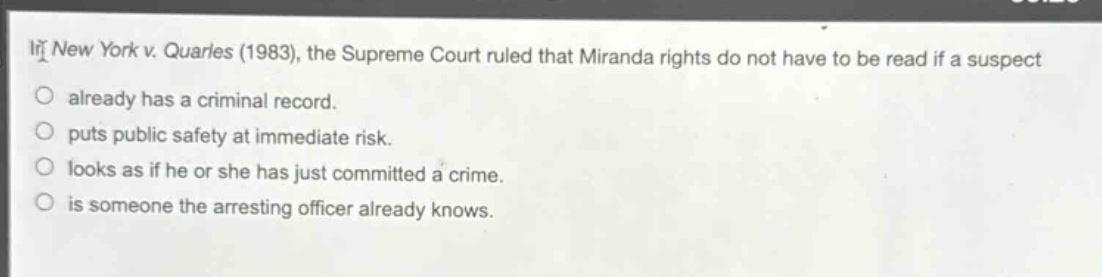
in new york v. quarles (1983), the supreme court ruled that miranda rights do not have to be read if a suspect\nalready has a criminal record.\nputs public safety at immediate risk.\nlooks as if he or she has just committed a crime.\nis someone the arresting officer already knows.
Answer
Brief Explanations:
In New York v. Quarles (1983), the Supreme - Court created a "public - safety exception" to the Miranda rule. This exception allows law - enforcement to question a suspect without reading Miranda rights when the suspect poses an immediate threat to public safety.
Answer:
B. puts public safety at immediate risk.