passing laws, creating courts, and collecting taxes are examples of\nconcurrent powers.\npoliticians…
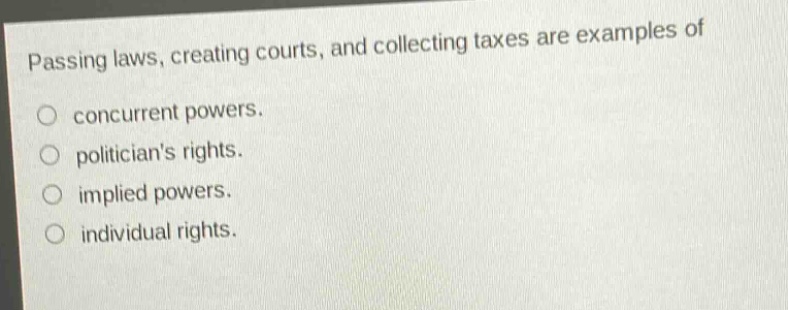
passing laws, creating courts, and collecting taxes are examples of\nconcurrent powers.\npoliticians rights.\nimplied powers.\nindividual rights.
Answer
Brief Explanations:
Concurrent powers are powers shared by the federal and state governments. Passing laws, creating courts, and collecting taxes are powers that both the federal and state - level governments can exercise. Politician's rights are not a standard term for these functions. Implied powers are powers not explicitly stated but inferred from the Constitution's necessary and proper clause. Individual rights pertain to the rights of people, not government functions.
Answer:
A. concurrent powers.