a patient with severe cognitive impairment is unable to provide informed consent. which ethical principle…
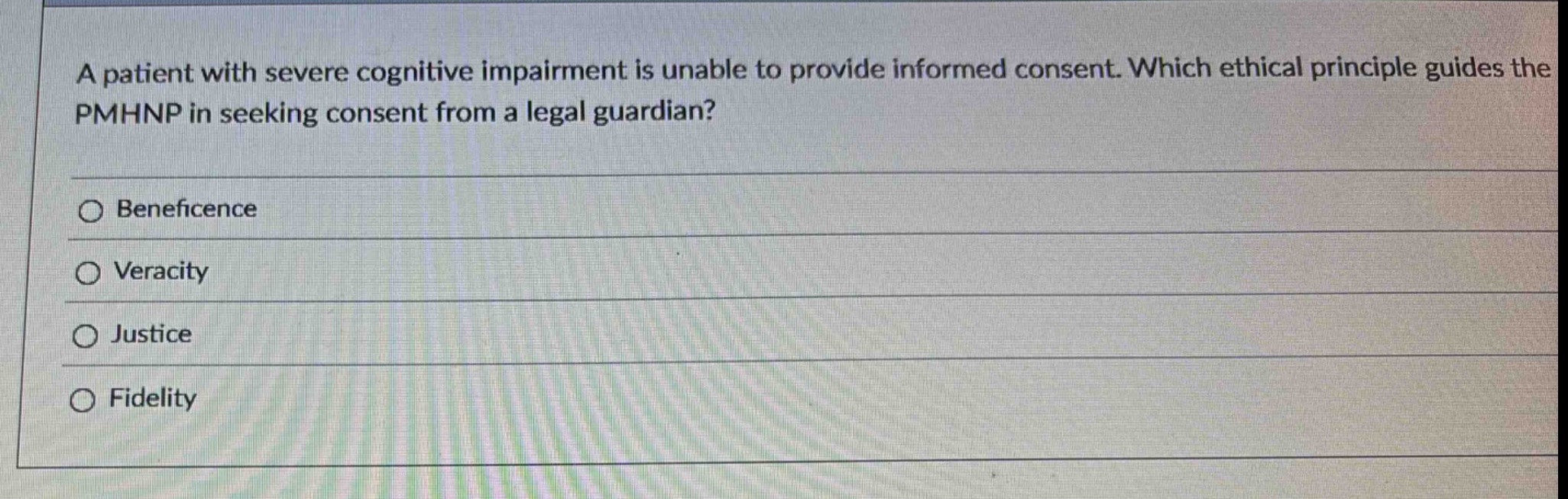
a patient with severe cognitive impairment is unable to provide informed consent. which ethical principle guides the pmhnp in seeking consent from a legal guardian?\nbeneficence\nveracity\njustice\nfidelity
Answer
Brief Explanations:
Beneficence is the principle of doing good for the patient. Since the patient with severe cognitive - impairment can't consent, seeking consent from a legal guardian is to ensure the patient receives beneficial treatment. Veracity is about truth - telling, justice is about fairness in distribution, and fidelity is about loyalty to the patient - provider relationship. Here, the focus is on doing good for the patient, which is beneficence.
Answer:
Beneficence