premise: segregated public schools are not equal and cannot be made equal.\npremise: because schools are not…
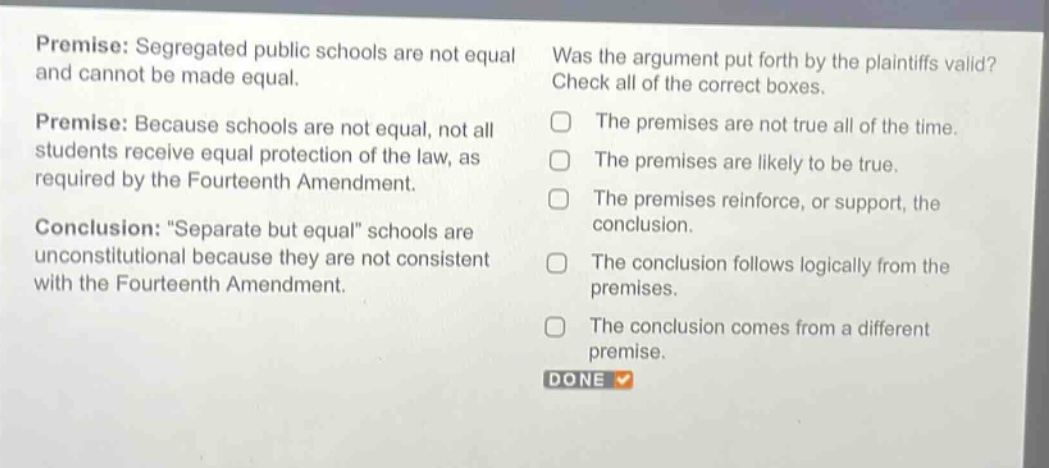
premise: segregated public schools are not equal and cannot be made equal.\npremise: because schools are not equal, not all students receive equal protection of the law, as required by the fourteenth amendment.\nconclusion: “separate but equal” schools are unconstitutional because they are not consistent with the fourteenth amendment.\nwas the argument put forth by the plaintiffs valid? check all of the correct boxes.\nthe premises are not true all of the time.\nthe premises are likely to be true.\nthe premises reinforce, or support, the conclusion.\nthe conclusion follows logically from the premises.\nthe conclusion comes from a different premise.\ndone
Answer
Brief Explanations:
The first premise about segregated public - schools not being equal is a well - established historical fact. The second premise links the inequality in schools to the lack of equal protection under the Fourteenth Amendment. The conclusion that "separate but equal" schools are unconstitutional follows logically from these two premises as they show a violation of the Fourteenth Amendment.
Answer:
The premises are likely to be true. The premises reinforce, or support, the conclusion. The conclusion follows logically from the premises.