the d.a.r.e. program (\drug abuse resistance education\) began in 1983. in this program, police officers…
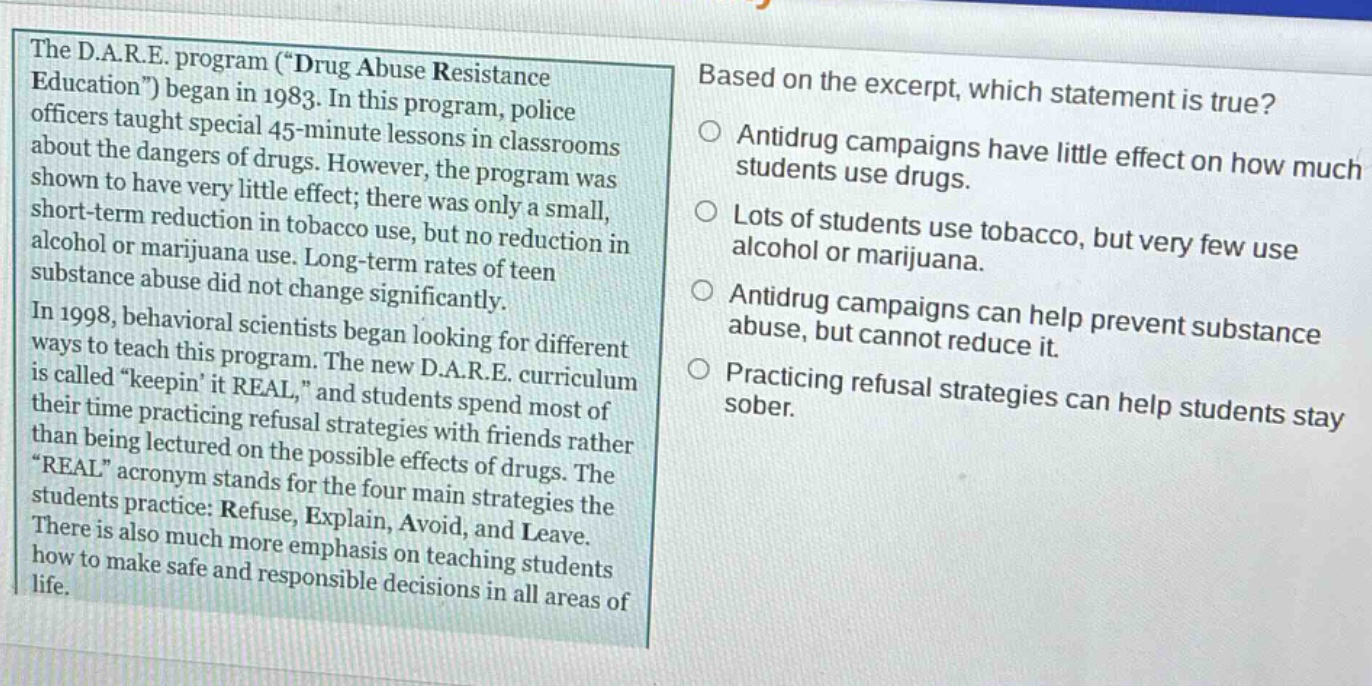
the d.a.r.e. program (\drug abuse resistance education\) began in 1983. in this program, police officers taught special 45 - minute lessons in classrooms about the dangers of drugs. however, the program was shown to have very little effect; there was only a small, short - term reduction in tobacco use, but no reduction in alcohol or marijuana use. long - term rates of teen substance abuse did not change significantly. in 1998, behavioral scientists began looking for different ways to teach this program. the new d.a.r.e. curriculum is called \keepin it real,\ and students spend most of their time practicing refusal strategies with friends rather than being lectured on the possible effects of drugs. the \real\ acronym stands for the four main strategies the students practice: refuse, explain, avoid, and leave. there is also much more emphasis on teaching students how to make safe and responsible decisions in all areas of life. based on the excerpt, which statement is true? antidrug campaigns have little effect on how much students use drugs. lots of students use tobacco, but very few use alcohol or marijuana. antidrug campaigns can help prevent substance abuse, but cannot reduce it. practicing refusal strategies can help students stay sober.
Answer
Brief Explanations:
The text states that the original D.A.R.E. program had little effect on drug - use among students, only a small short - term reduction in tobacco use. The new "keepin' it REAL" curriculum focuses on refusal strategies. This implies that practicing these refusal strategies can help students stay sober. The other statements are not supported by the text.
Answer:
Practicing refusal strategies can help students stay sober.